Home > Solution > Traditional Battery& Power Solutions (Lead- Acid,etc.)
Flow battery stack testing requires more than voltage and current. Learn why flow rate, pressure, temperature, and synchronized data acquisition matter for R&D and production testing.
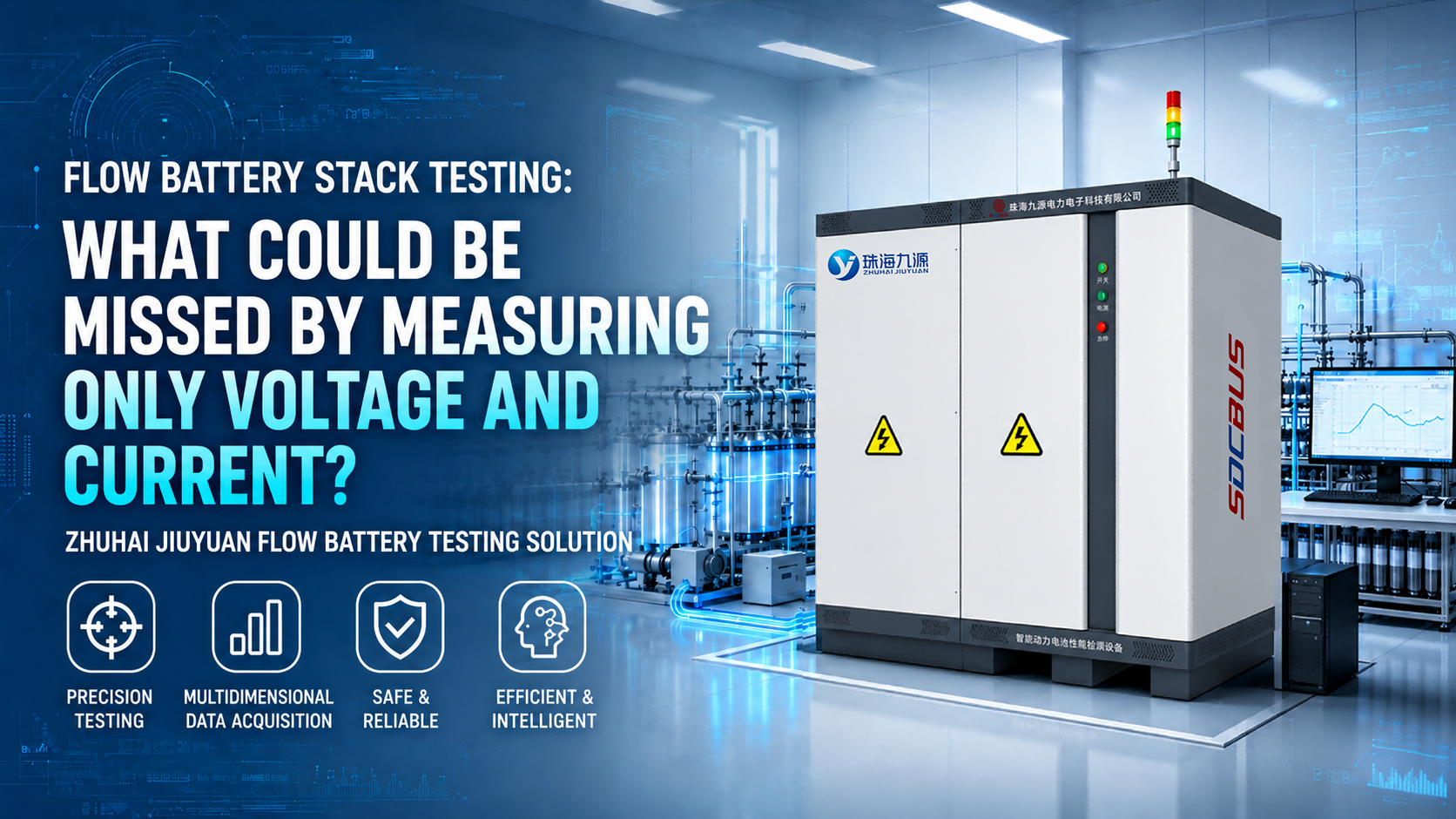
When it comes to flow battery stack testing, completing a single charge-discharge cycle is far from the whole story. In real-world R&D validation and automated production testing, engineers and manufacturers are increasingly concerned with a broader set of questions:
Can it coordinate with circulation pumps, valves, temperature control units, and other auxiliary systems?
Can the system detect anomalies in real time and trigger protective actions?
Are test results accurate, repeatable, and traceable across different stacks and production batches?
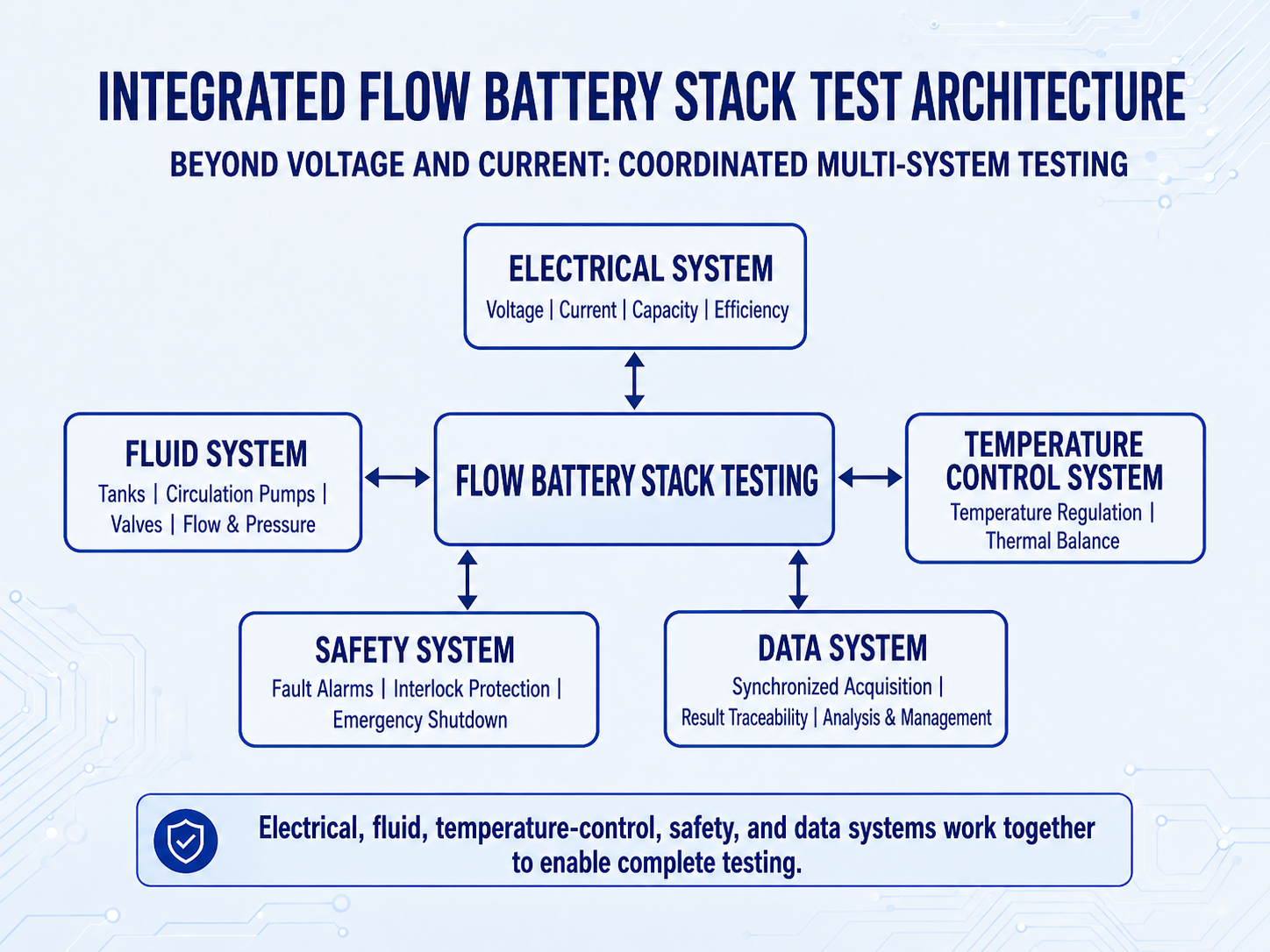
In other words, flow battery stack testing is not a purely electrical exercise. It is an integrated process that encompasses electrical, fluid, thermal, safety, and data management dimensions—all of which must work together to produce meaningful and reliable results.
Traditional battery testers focus primarily on electrical parameters: voltage, current, capacity, and efficiency. But flow batteries are inherently different. Their performance is heavily influenced by electrolyte flow rate, inlet and outlet pressure, pressure differential between electrodes, temperature, and the overall condition of the circulation system.
Consider a few examples:
Abnormal pressure or differential pressure may increase the risk of stack damage.
Temperature deviations can compromise both test accuracy and operational stability.
If these fluid and thermal parameters are not recorded synchronously with charge-discharge data, it becomes nearly impossible to determine whether a performance change originates from the stack itself or from the auxiliary systems—pumps, valves, or thermal management units. A single charge-discharge curve, no matter how precise, cannot tell the whole story.
The bottom line: Flow battery stack testing requires a comprehensive approach that combines electrical and fluid-state analysis under well-defined, stable operating conditions.
A purpose-built test platform for flow battery stacks needs to address several core capabilities:
The platform should allow users to program and automate test procedures—including charge, discharge, rest, temperature control, electrolyte refill, and purge steps—based on stack type and test requirements. Given that different projects involve different stack designs, fluid circuit architectures, and process requirements, the system must be highly configurable rather than relying on fixed manual sequences.
For production testing, the platform should also align with design cycle times, minimizing manual waiting and repetitive operations to seamlessly integrate with automated production lines.
Beyond voltage, current, and individual cell data, the platform should accommodate additional signal inputs such as flow rate, pressure, differential pressure, temperature, and equipment operational status—all based on project-specific needs.
Recording all these parameters on a common timeline within the same test sequence enables engineers to analyze the relationship between operating conditions and stack performance. It also provides a solid foundation for anomaly investigation and process optimization.
A professional test platform must do more than simply "connect" devices. It should enable coordinated operation among charge-discharge equipment, circulation pumps, variable-frequency drives, valves, thermal management units, BMS, and other control systems—all governed by a unified logic.
For example, the system can automatically start or stop pumps and valves based on test steps, adjust circulation pump operation to meet flow rate requirements, and coordinate with thermal management units in response to temperature changes—reducing human intervention and improving test consistency.
Whether for long-duration cycle validation or automated production testing, the system must continuously monitor:
Pressure and pressure differential within acceptable ranges
Temperature compliance with setpoints
Leakage detection
Normal operation of circulation pumps and related equipment
Individual cell voltage anomalies
When any parameter exceeds predefined thresholds, the platform should trigger appropriate responses—alarms, output shutdown, pump stop, or full system protection—to mitigate the risk of damage escalation.
For production testing, accuracy alone is not enough. Results must be linked to specific stacks, test procedures, and operating conditions. The platform should support unified management of product information, test parameters, raw data, alarm logs, and pass/fail decisions—and integrate with MES or other quality management systems as needed.
This not only facilitates pass/fail determination but also provides the data backbone for anomaly analysis, quality traceability, and continuous process improvement.
Flow battery stack testing is not a one-size-fits-all proposition. Depending on the application, requirements differ significantly:
In the R&D phase, flexibility and data completeness take priority. Key needs include:
Synchronized multi-parameter acquisition
Comparative analysis across different flow rates, temperatures, and operating conditions
Stack performance, efficiency, and consistency analysis
Long-duration cycling and aging trend observation
Abnormal condition and protection logic validation
Aging validation is often an essential part of this phase, with the focus on observing performance degradation and reliability over extended operation.
In production settings, repeatability and stability are paramount. Key needs include:
Fully automated fluid-side test execution
Coordinated operation of pumps, valves, refill, purge, and thermal management systems
Compliance of flow rate, pressure, differential pressure, and temperature with specifications
Automatic anomaly detection and pass/fail determination
Binding of product information with test data for full traceability
Some manufacturers also incorporate cycling activation or aging steps into the production process. In these cases, aging is not a standalone scenario but a specific segment within the production test flow.
The key takeaway: A professional test solution is not about adding as many features as possible. It is about identifying exactly what needs to be controlled, acquired, and coordinated—based on stack parameters, process design, test objectives, and production requirements.
At Zhuhai Jiuyuan Power Electronics Technology, we specialize in industrial-grade converter technology, high-end equipment manufacturing, and intelligent energy management solutions. Our core portfolio spans the entire energy chain—from generation and grid to load and storage—with a particular focus on high-precision battery testing systems that have been integral to the success of key players worldwide.
We have accumulated extensive experience in both R&D validation and automated production testing for flow battery stacks. Our test solutions can be tailored to cover long-duration cycling, aging validation, and production-line fluid-side testing as specific process steps.
Depending on project requirements, we integrate charge-discharge equipment with fluid circuit control, temperature management, individual cell data acquisition, safety interlocking, and data management—helping customers establish more automated, stable, and traceable testing workflows.
Our power conversion systems leverage patented topologies achieving up to 98.5% efficiency, while proprietary wireless interconnections between core modules enhance system reliability and reduce maintenance. Engineered with industrial-grade components verified for 15+ year operational lifespans, our platforms ensure grid resilience through phase-sequence-independent synchronization and pure sine wave output meeting stringent grid interconnection standards.
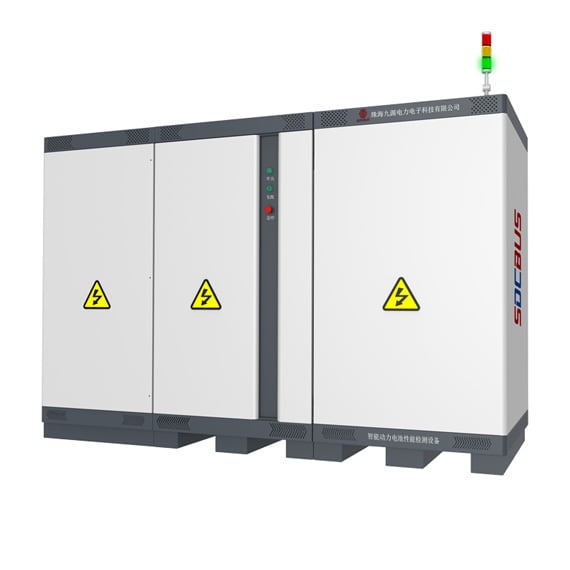
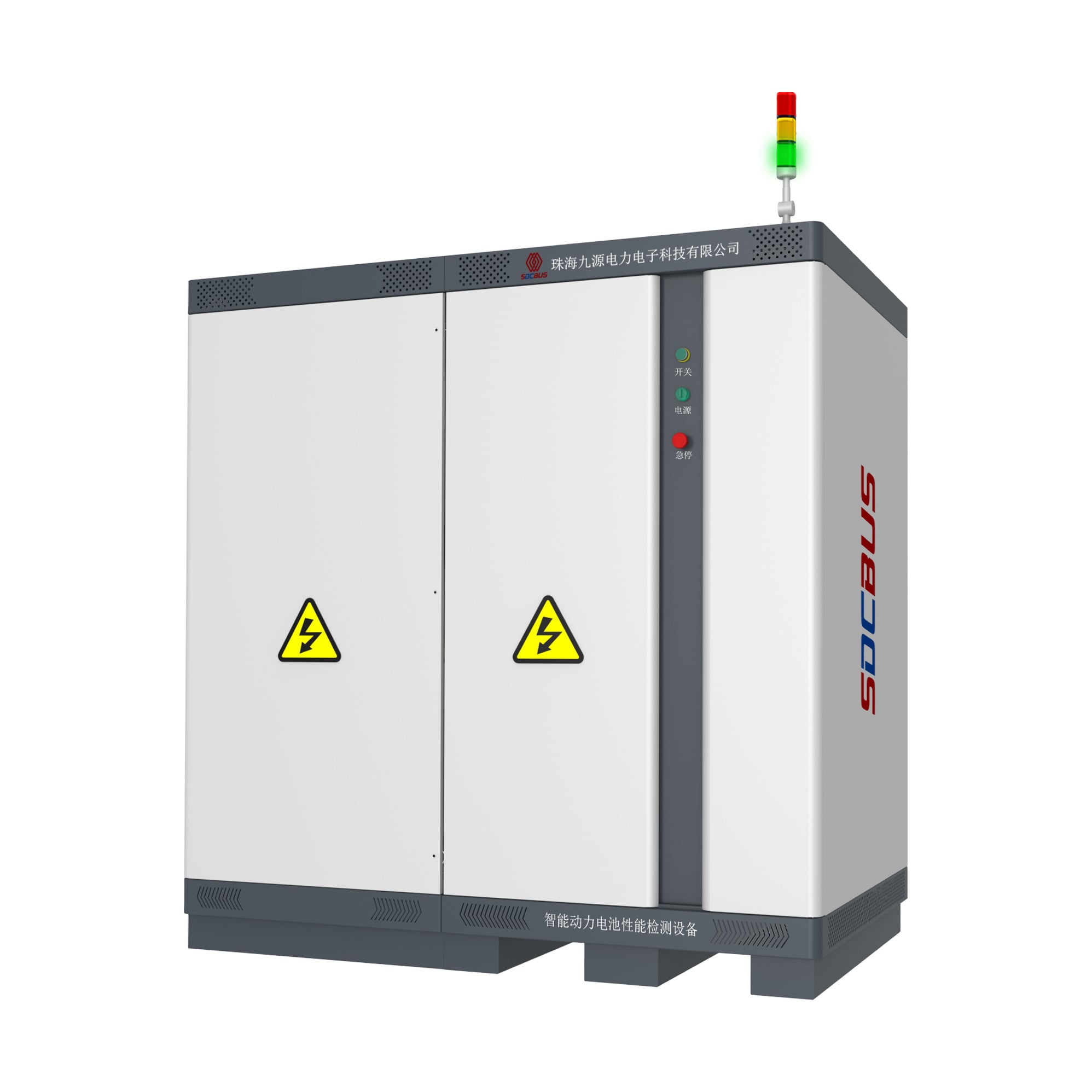
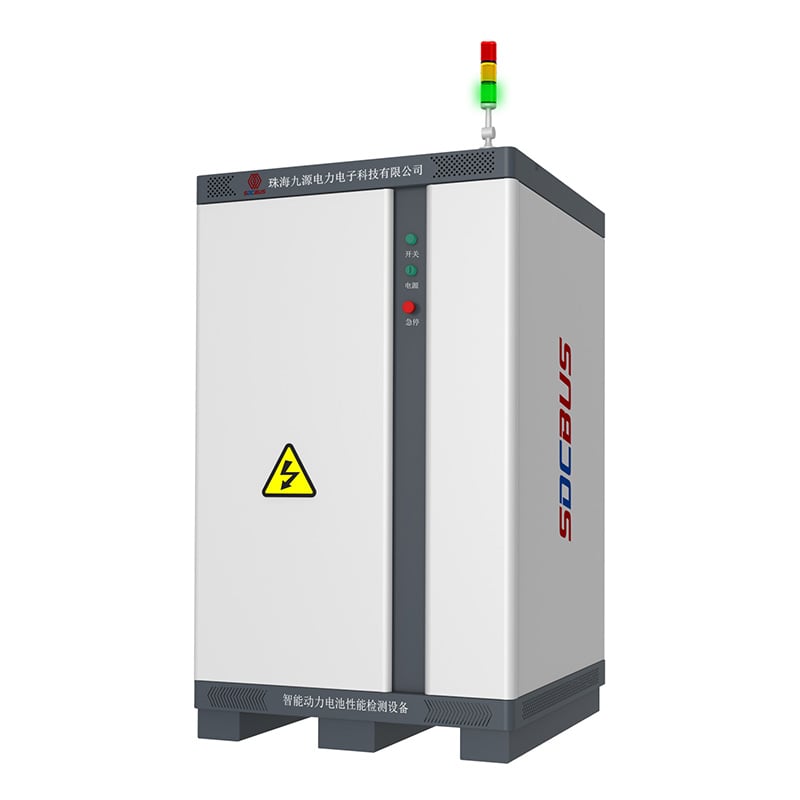
We offer charge-discharge test configurations ranging from hundreds of amps to thousands of amps, with flexible combinations and parallel expansion based on stack voltage, current, and power requirements. Our SDCBUS test platform covers a voltage range of 5V to 2500V, with specific configurations determined by test object, channel count, production cycle time, and supporting systems.
Integrated automation streamlines testing and management, minimizing operational complexity and total cost of ownership. Our regenerative energy feedback system, combined with a common DC bus architecture, further enhances energy efficiency during long-duration cycling tests.
When planning a flow battery stack test platform, we recommend starting with four key questions:
Which parameters need to be acquired—flow rate, pressure, differential pressure, temperature, and individual cell data?
Which auxiliary systems need to be coordinated—circulation pumps, valves, thermal management units, and control systems?
Is this for R&D/process validation or automated production testing?
With these answers in place, you can then determine test procedures, control boundaries, safety interlocks, and equipment configurations.
The value of flow battery stack testing is not merely completing a charge-discharge cycle. It is about ensuring that every test is conducted under well-defined, stable, and traceable operating conditions—so that the results you obtain are results you can trust.
At Zhuhai Jiuyuan, we work closely with our customers to assess specific testing requirements and provide tailored system configuration recommendations for every stage of the flow battery lifecycle—from R&D to production.
For more details, please contact our sales team.

 EN
EN