
 EN
EN
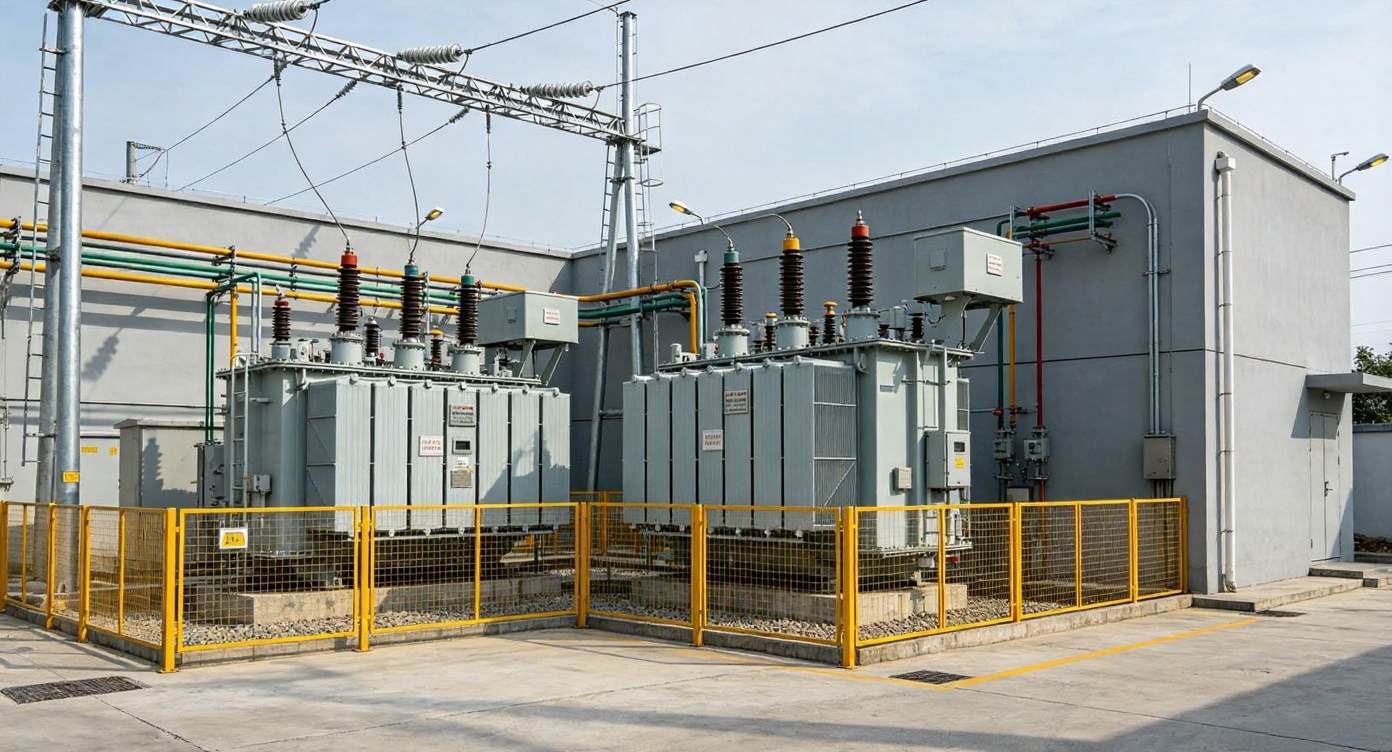
Every engineer who has run full-scale prototype validation or Approved Vendor List (AVL) qualification testing for containerized battery energy storage systems (BESS) knows the scenario: the test plan is approved, the power budget is calculated — and the site's transformer capacity simply is not enough.
Requesting a grid connection upgrade means long lead times and high cost, which the project schedule cannot absorb. Skipping the upgrade means high-power test profiles cannot run at full depth, the data set is incomplete, and the customer deliverable is at risk.
On the other side of the same coin, the finance team is frowning at the utility bill. Container-level testing is, by definition, repeated full charge and full discharge cycles. The higher the test power, the more dramatic the electricity cost. At some large-scale energy storage test sites, monthly electricity bills approach the monthly rental cost of the test equipment itself.
Insufficient grid connection capacity and excessive test energy consumption are now the two most pressing constraints facing battery manufacturers and system integrators during prototype validation and AVL qualification. This article explains why these constraints exist, compares the two mainstream technical approaches, and outlines four practical criteria for selecting an energy storage container testing system.
Why Container-Level Testing Hits the Grid Capacity Wall
Before shipment, every energy storage container must undergo complete verification of its charge/discharge characteristics, cycling behavior, and operating profile simulation. The required test power directly corresponds to the rated power of the container under test — commonly 2.5 MW to 5 MW per unit at utility scale.
The problem: almost every manufacturing site's transformer is sized for production loads, not for multi-megawatt test rigs. Upgrading the grid connection involves transformer replacement and medium-voltage construction that can cost hundreds of thousands of dollars and take quarters to complete.
Traditional test architectures make it worse. In conventional setups, the energy released during discharge is dissipated in resistive load banks or fed back to the grid at low efficiency. Every repeated charge/discharge cycle consumes grid energy and generates waste heat, directly eroding project margins.
Grid capacity and energy cost are two faces of the same problem: how much power you can draw is limited by your grid connection, and how much you draw determines your bill. Together they form the two most realistic barriers in container-level BESS testing.
Two Technical Routes: AC-Coupled PCS Back-to-Back vs. Common DC Bus Matrix
The industry currently follows two main technical routes for container-level charge/discharge testing.
Route 1: Conventional AC-Coupled PCS Back-to-Back
Two or more Power Conversion Systems (PCS) are coupled on the AC side: one charges the battery while another discharges. Energy travels the path Battery A → DC/AC → AC bus → AC/DC → Battery B, passing through two full AC/DC conversion stages.
This approach is mature and has a low selection threshold. However, the double conversion stages limit system efficiency, and — critically — the architecture still relies on the utility grid as an intermediary. The grid capacity problem is not actually solved.
Route 2: Common DC Bus Matrix Back-to-Back
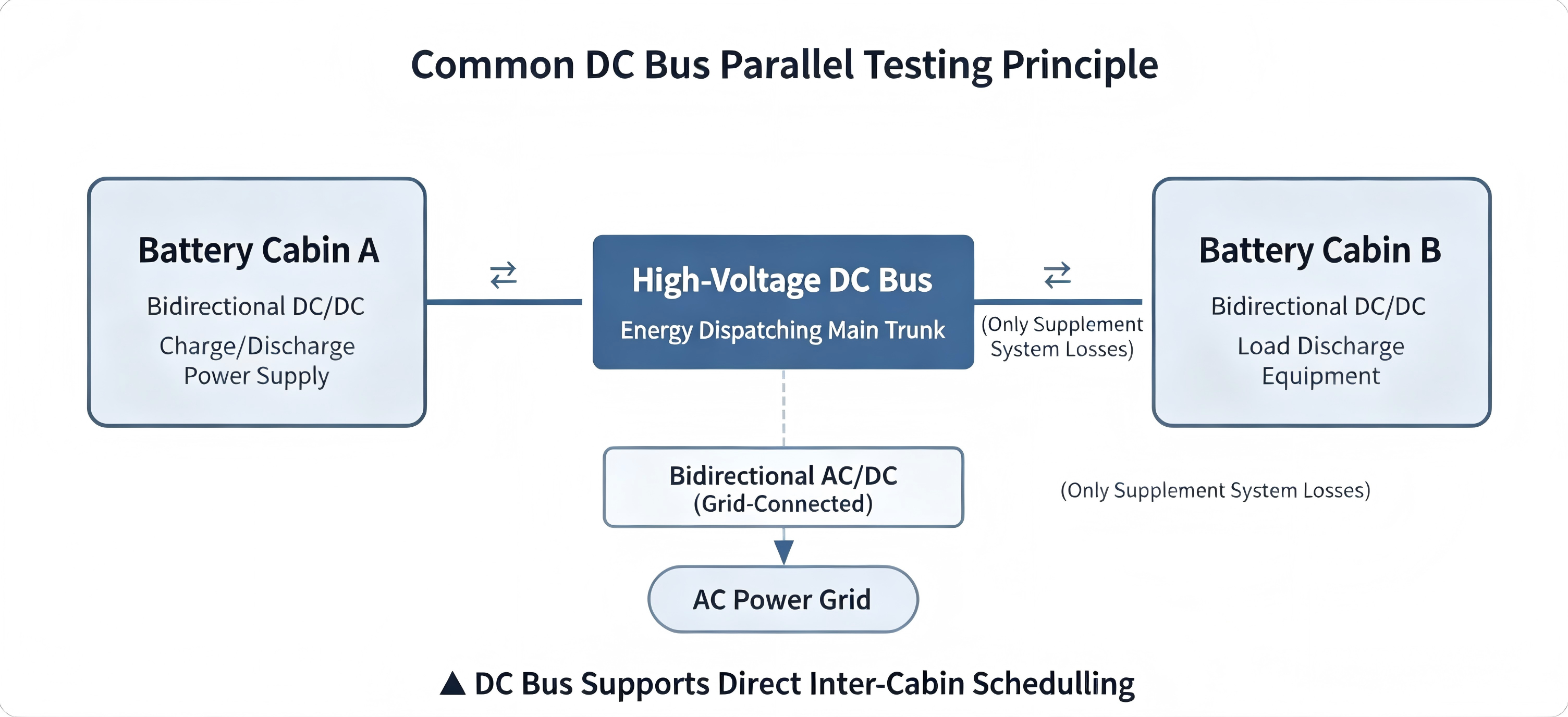
In this architecture, energy never touches the AC side. Multiple test channels connect through a high-voltage common DC bus, so the energy discharged by one battery container directly charges another. The grid only supplies system losses or absorbs surplus energy.
Removing one conversion stage shortens the energy path and cuts losses. The trade-off is a higher technical barrier: it demands high-voltage DC bus design and control, precise multi-channel power scheduling, and comprehensive protection strategies. Fully commercialized solutions remain rare in the market.
Side-by-Side Comparison
|
Dimension |
AC-Coupled PCS Back-to-Back |
Common DC Bus Matrix |
|
Energy path |
Two conversion stages (DC/AC + AC/DC) |
One stage, direct DC-side transfer |
|
System efficiency |
Limited by double conversion |
Higher — fewer conversion losses |
|
Grid dependency |
Grid acts as intermediary; full capacity still needed |
Grid only covers losses and surplus |
|
Suitability for capacity-limited sites |
Low |
High |
|
Technical maturity |
Mature, widely available |
Higher barrier; few commercial solutions |
|
Multi-channel parallel testing |
Limited |
Native — matrix architecture |
The essential difference: whether the energy must "transit" through the AC side. In a common DC bus system, energy is scheduled directly between containers on the DC side — a shorter path with fewer stages, while the grid merely tops up system losses.
Four Evaluation Criteria for Choosing a Container Test System
When comparing the two routes, engineering teams can assess along four dimensions:
- Grid connection conditions. Can your site's transformer capacity be upgraded? If capacity is tight, choose an architecture with low grid dependency.
- Test throughput. How many containers must be tested per day? Multi-channel parallel capability directly determines throughput.
- Energy cost horizon. Will the test station operate for years? Small efficiency differences compound into large cost gaps over long-term operation.
- Future scalability. Can the system be expanded modularly to cover next-generation voltage and power requirements without redesign?
MatrixLink-PST: A Common DC Bus Test System Built for These Constraints
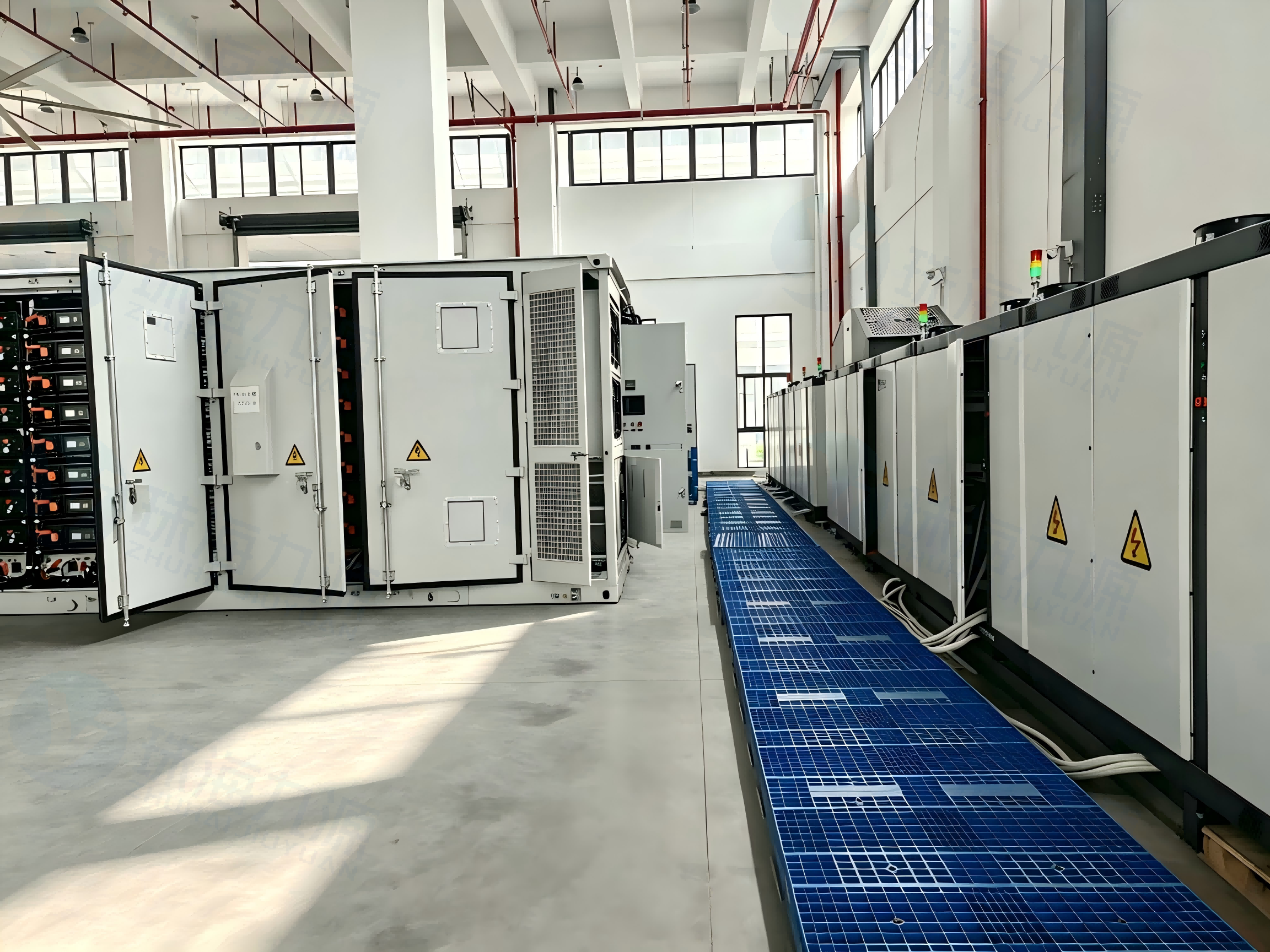
Zhuhai Jiuyuan's MatrixLink-PST matrix-type ESS back-to-back power routing test system was engineered specifically around the two constraints above. Key design features include:
Common DC Bus Topology
A high-voltage DC bus acts as the "main artery" for test energy. The grid only compensates for losses and recovers surplus. This is Jiuyuan's self-developed technology, protected by multiple invention patents, and achieves up to 98.5% peak system-level efficiency.
Matrix Multi-Channel Architecture
The system supports flexible 2-to-4 channel configurations, with each channel independently controlling charge and discharge parameters — enabling multiple containers to be tested in parallel. The modular design supports smooth capacity expansion: adding channels requires cabinet-level augmentation, not custom hardware redesign.
High-Precision Control for Qualification-Grade Data
High-speed power control paired with high-precision sensors ensures data accuracy and repeatability. Voltage and current measurement accuracy is ±0.05% full scale — the precision level demanded by AVL qualification and pre-certification test campaigns.
Key Specifications
|
Parameter |
MatrixLink-PST |
|
Channel voltage range |
80 V – 2500 V |
|
Power per channel |
≥ 600 kW (MW-level expansion supported) |
|
Current options |
2400 A / 3000 A / 3600 A / 4000 A |
|
Voltage & current accuracy |
±0.05% FS |
The 80–2500 V window covers both today's mainstream container platforms and next-generation high-voltage designs, so one system investment stays relevant as product roadmaps evolve.
FAQ
What is energy storage container testing? It is the system-level verification of a complete containerized BESS — charge/discharge characteristics, capacity, cycling behavior, and operating profile simulation — performed at rated power before shipment. Unlike cell- or rack-level testing, it validates the fully integrated container as it will be delivered.
Why is grid capacity a bottleneck for container testing? Test power must match the container's rated power, often several megawatts. Factory transformers are sized for production loads, and grid connection upgrades are expensive and slow. Test architectures with low grid dependency — such as common DC bus back-to-back systems — sidestep this constraint.
How does a common DC bus test system reduce electricity costs? One container's discharge energy directly charges another container through the shared DC bus, so the site only draws grid power to cover conversion losses. Combined with regenerative handling of surplus energy, this dramatically cuts net energy consumption per test cycle compared to resistive dissipation or AC-side transit.
What does AVL qualification testing require from test equipment? Approved Vendor List qualification demands accurate, repeatable data at full rated power. Equipment must deliver precision measurement (e.g., ±0.05% FS), stable multi-channel control, and complete data logging to withstand customer and third-party audit.
Conclusion
Prototype validation and AVL qualification for energy storage containers now face a dual constraint: grid connection capacity and test energy cost. Conventional AC-coupled PCS back-to-back systems are mature but efficiency-limited and grid-dependent. Common DC bus architectures deliver higher efficiency and lower grid dependency, at the cost of a higher technical barrier.
For sites with tight grid capacity, heavy test schedules, and long-term operation plans, a common DC bus solution — like Jiuyuan's MatrixLink-PST matrix test system — offers a clear advantage in total cost of ownership over the life of the test station.
Planning your container-level testing capability? [Explore the Matrix-Form ESS Back-to-Back Power Router → [INTERNAL LINK: https://www.jiuyuantech-cn.com/matrix--form-ess-back-to-back-power-router]] or [contact our engineering team for a detailed technical specification [INTERNAL LINK: https://www.jiuyuantech-cn.com/solution]].