
 EN
EN
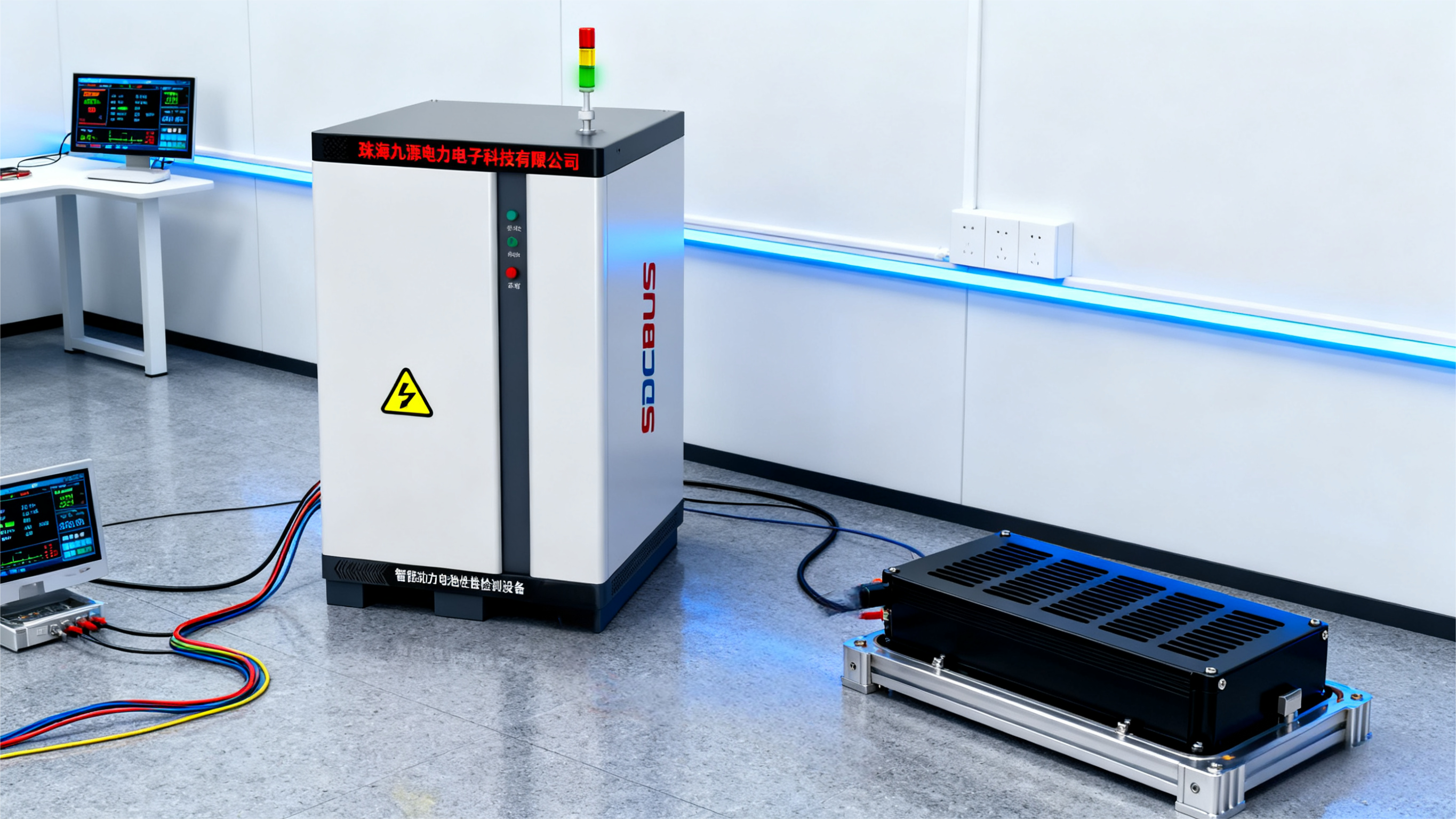
Programmable Energy Storage Testing Systems: Advanced Technical Features for System-Level Validation
The rapid expansion of utility-scale renewable energy and high-voltage grid integration has fundamentally changed how electrical assets are validated. Modern energy storage systems (ESS) are no longer simple static hardware setups; they are dynamic, highly complex networks combining advanced electrochemistry, high-power bidirectional electronics, and intelligent control algorithms. To ensure these massive systems operate safely under volatile real-world conditions, engineering teams cannot rely on generic electrical validation tools. The demand for highly stable, advanced verification architectures has driven the evolution of specialized programmable energy storage testing system configurations. These integrated platforms serve as the absolute foundation for characterising system-level safety, verifying grid adaptability, and guaranteeing long-term asset reliability before field deployment occurs.
Moving Beyond Standalone Hardware to Integrated Performance Validation
Understanding the true nature of modern high-power validation requires a clear look at equipment classification. Our technical engineering matrix at Zhuhai Jiuyuan Power Electronic Technology is designed strictly around specialized performance testing systems rather than the manufacturing or distribution of standalone power electronics or generic component hardware. A high-performance programmable energy storage testing system operates as a fully integrated, automated infrastructure designed to evaluate how megawatt-class equipment interacts under complex operational stress.
By prioritizing comprehensive performance validation over basic electrical sourcing, these platforms allow R&D teams to simulate complex charging and discharging profiles, multi-stage grid fault events, and prolonged thermal lifecycle stress. This specialized systemic focus provides engineering teams with a unified, controlled laboratory environment to systematically isolate firmware bottlenecks, evaluate protection thresholds, and gather authoritative data without introducing physical risks to the surrounding facility network.
Establishing High-Precision Technical Benchmarks for System Validation
In large-scale energy storage development, minor measurement errors can lead to catastrophic discrepancies over thousands of operational cycles. When characterizing high-voltage battery modules, even a tiny drift in voltage or current tracking can invalidate long-term degradation tracking, compromise Battery Management System (BMS) logic validation, and lead to regulatory certification failures.
To eliminate these testing blind spots, our integrated validation platforms deliver an elite measurement and control threshold, maintaining exceptional tracking precision across all operational channels. This high level of precision ensures that when evaluating critical operational parameters—such as DC Internal Resistance (DCIR) through high-speed pulse tracking or complex round-trip efficiency (RTE) profiles—the captured dataset remains mathematically defensible and completely reproducible. This baseline accuracy is paired with a true four-quadrant bidirectional execution matrix, allowing the testing system to seamlessly source and absorb power with stable tracking continuity, which is a baseline prerequisite for valid compliance reporting.
Eliminating Interference via Robust Industrial Fieldbus Integration
The electrical environment surrounding high-power energy storage converters is filled with severe electromagnetic interference (EMI) generated by rapid semiconductor switching circuits. To shield critical engineering data against ambient telemetry noise and protect the integrity of long-term lifecycle testing, modern programmable architectures rely exclusively on robust, noise-immune industrial fieldbuses.
Our integrated systems utilize a secure, native combination of CAN (Controller Area Network) and high-speed Daisy Chain configurations to establish millisecond-level synchronization across dozens of testing channels simultaneously. Complemented by RS485, RS232, and Modbus (RTU/TCP) industrial protocols, this resilient network structure provides a clean, transparent, and lag-free data linkage directly between the verification hardware and the laboratory analytics software. This integrated approach prevents critical command latency during emergency shutdown validation while completely eliminating the risk of packet corruption common to standard consumer-grade connections.
Defining Strict Specialization Boundaries and Application Realities
To maintain maximum technical focus and data integrity, our industrial technology ecosystem is engineered specifically for utility-scale energy infrastructure, battery PACK-level performance verification, microgrid characterization, and high-power Power Conversion System (PCS) adaptability testing.
By maintaining this strict technical boundary, we deliberately focus our engineering matrix on system-level validation, operating completely independently of individual small-scale component assembly lines, consumer-grade UPS platforms, low-voltage industrial frequency converters, or localized factory automation tools. This specialization shields the testing environment from unrelated transient spikes, ensuring that the collected datasets represent pure, uncorrupted system performance tailored specifically to the intense electrical demands of large-scale battery storage assets.
Real-World Engineering Insights from Full-Scale Megawatt Class Pre-Compliance Testing
Validating compliance with international utility standards—such as IEEE 1547, IEC 62933, or rigid regional grid codes—demands rigorous empirical proof under extreme physical stress. In a recent validation project, our technical field engineers deployed our integrated performance testing matrix to characterize a 500kW grid-tied commercial conversion module destined for an overseas distributed energy network.
The testing loop required executing precise Low Voltage Ride-Through (LVRT) and High Voltage Ride-Through (HVRT) sequence scripts while managing massive, sudden load swings from the device under test. Utilizing our high-accuracy tracking system, the platform stabilized the testing environment and captured flawless, independent data metrics as the converter's integrated protection circuits responded to simulated grid step faults well within industry-standard millisecond limits. This comprehensive laboratory-controlled validation allowed the client to optimize their control firmware ahead of official audits, successfully avoiding expensive field certification delays and safeguarding their capital investment.
Conclusion
Advanced programmable testing architectures represent the definitive foundation of credible, globally accepted energy storage characterization. By replacing unpredictable field uncertainties with laboratory-controlled, high-fidelity simulation, these systems provide forward-thinking manufacturers with the documented evidence of performance and safety that global regulators and utility developers increasingly demand.
Table of Contents
- Programmable Energy Storage Testing Systems: Advanced Technical Features for System-Level Validation
- Moving Beyond Standalone Hardware to Integrated Performance Validation
- Establishing High-Precision Technical Benchmarks for System Validation
- Eliminating Interference via Robust Industrial Fieldbus Integration
- Defining Strict Specialization Boundaries and Application Realities
- Real-World Engineering Insights from Full-Scale Megawatt Class Pre-Compliance Testing
- Conclusion