
 EN
EN
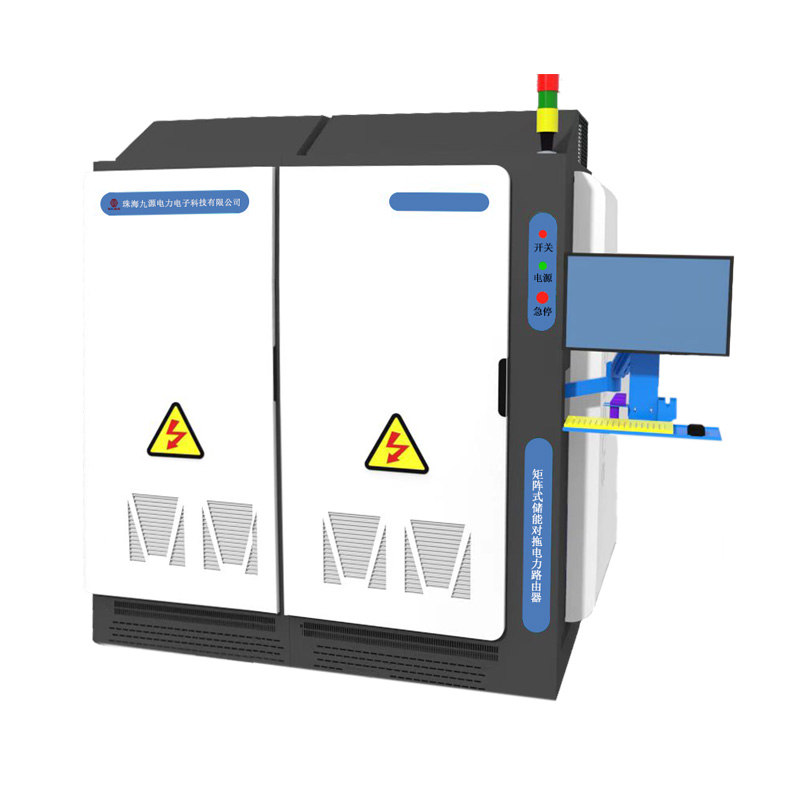
The rapid expansion of renewable energy systems and electric mobility has placed unprecedented demands on battery verification. Developing next-generation energy storage technology requires not just standard validation, but highly specialized, professional energy storage r&d test equipment. For research and development (R&D) teams, choosing the correct testing infrastructure determines how quickly a product can move safely from the laboratory floor to global commercial markets.
The Role of Advanced Testing in Renewable Energy Integration
Modern energy storage systems are complex ecosystems combining electrochemistry, power electronics, and digital control layers. Unlike consumer electronics, large-scale storage technologies—such as Power Conversion Systems (PCS) and high-voltage battery packs—must interact dynamically with unpredictable electrical grids.
Using basic validation tools during the R&D phase introduces extreme technical blind spots. A dedicated professional energy storage r&d test equipment platform serves as a controlled environment to simulate these harsh real-world conditions. By replicating exact grid variations and multi-channel synchronization, R&D engineers can isolate specific hardware or software weaknesses early in the design cycle, long before field deployment occurs.
Achieving High-Precision Characterization to Ensure Reliable Data
The foundation of any authoritative R&D report rests on the precision of the hardware used to capture performance metrics. When characterising the behavior of advanced battery packs and modules, minor measurement deviations can compound into massive discrepancies over thousands of test cycles.
Top-tier professional energy storage r&d test equipment is engineered to deliver tight measurement boundaries, guaranteeing an output current and voltage accuracy of ±0.05% (five-ten-thousandths) alongside a fine adjustment resolution of 1mV/0.1mA. This rigorous standard allows research engineers to accurately evaluate critical parameters such as DC Internal Resistance (DCIR) through high-speed pulse current tracking, and calculate true Coulombic efficiency with extreme precision. This baseline accuracy ensures that long-term degradation tracking remains scientifically valid and compliant with international standards like IEC 62660.
Enhancing Laboratory Safety Through Simulation and Emulation
Safety is the absolute priority in any energy storage development laboratory. Testing high-energy battery packs under extreme conditions introduces severe operational risks, including thermal runaway or structural failure.
Advanced professional energy storage r&d test equipment mitigates these risks by prioritizing simulation and emulation over volatile physical materials. For instance, during Battery Management System (BMS) validation, instead of connecting dangerous real battery cells which can easily catch fire under fault conditions, specialized test systems utilize high-resolution programmable units to emulate individual cell voltages safely. This allows teams to safely execute extreme fault scenarios—such as severe cell imbalance or low-voltage cutoffs—in a highly repeatable and safe manner.
Implementing Robust Communication Protocols for Multi-Channel Synchronization
Data collection in a modern R&D facility must be resilient against electromagnetic interference, which is highly prevalent around high-power energy storage converters. Standard consumer-grade data connections like USB can result in data corruption or communication drops that ruin weeks of continuous life-cycle testing.
To eliminate these vulnerabilities, professional testing architectures utilize industrial-grade communication protocols to ensure absolute data integrity. Interconnecting testing channels via CAN (Controller Area Network) and Daisy Chain configurations allows for synchronized control across dozens of channels simultaneously. Coupled with RS485, RS232, and Modbus protocols, these networks ensure a clean, transparent data stream directly between the testing hardware and the laboratory analytics software.
Understanding Equipment Boundaries and Specialized Specialization
To maintain a highly focused approach to performance validation, our advanced testing platforms are engineered around professional specialized specialization.
Our systems concentrate entirely on comprehensive battery PACK-level performance testing and full-scale energy storage system validation. Rather than dealing with individual battery cell-level testing (cell testing), our platform is strategically optimized to evaluate multi-cell modules under highly integrated operational stress. By deliberately focusing on utility-scale energy storage, battery PACKs, and grid-tied PCS adaptability standards, our hardware isolates its operational parameters from the transient electrical spikes common in general power supplies, UPS inverters, or standard factory automation lines, thereby keeping your R&D dataset flawless.
Accelerating Market Launch Through Pre-Compliance Verification
Navigating global grid codes and international compliance standards is one of the most significant challenges for energy storage developers. Field testing on live grids to meet regional grid codes is prohibitively expensive, risky, and completely unrepeatable.
Integrating professional energy storage r&d test equipment equipped with highly precise grid simulation capabilities allows engineering teams to perform comprehensive pre-compliance verification directly inside the lab. Researchers can precisely program and repeat complex grid phenomena, including voltage sags, short interruptions, frequency drift, and phase imbalance. Finding product defects and firmware limitations during early boundary analysis significantly reduces the risk of certification delays or post-launch failures, ultimately safeguarding the enterprise's brand reputation and capital investment.
Table of Contents
- The Role of Advanced Testing in Renewable Energy Integration
- Achieving High-Precision Characterization to Ensure Reliable Data
- Enhancing Laboratory Safety Through Simulation and Emulation
- Implementing Robust Communication Protocols for Multi-Channel Synchronization
- Understanding Equipment Boundaries and Specialized Specialization
- Accelerating Market Launch Through Pre-Compliance Verification