
 EN
EN
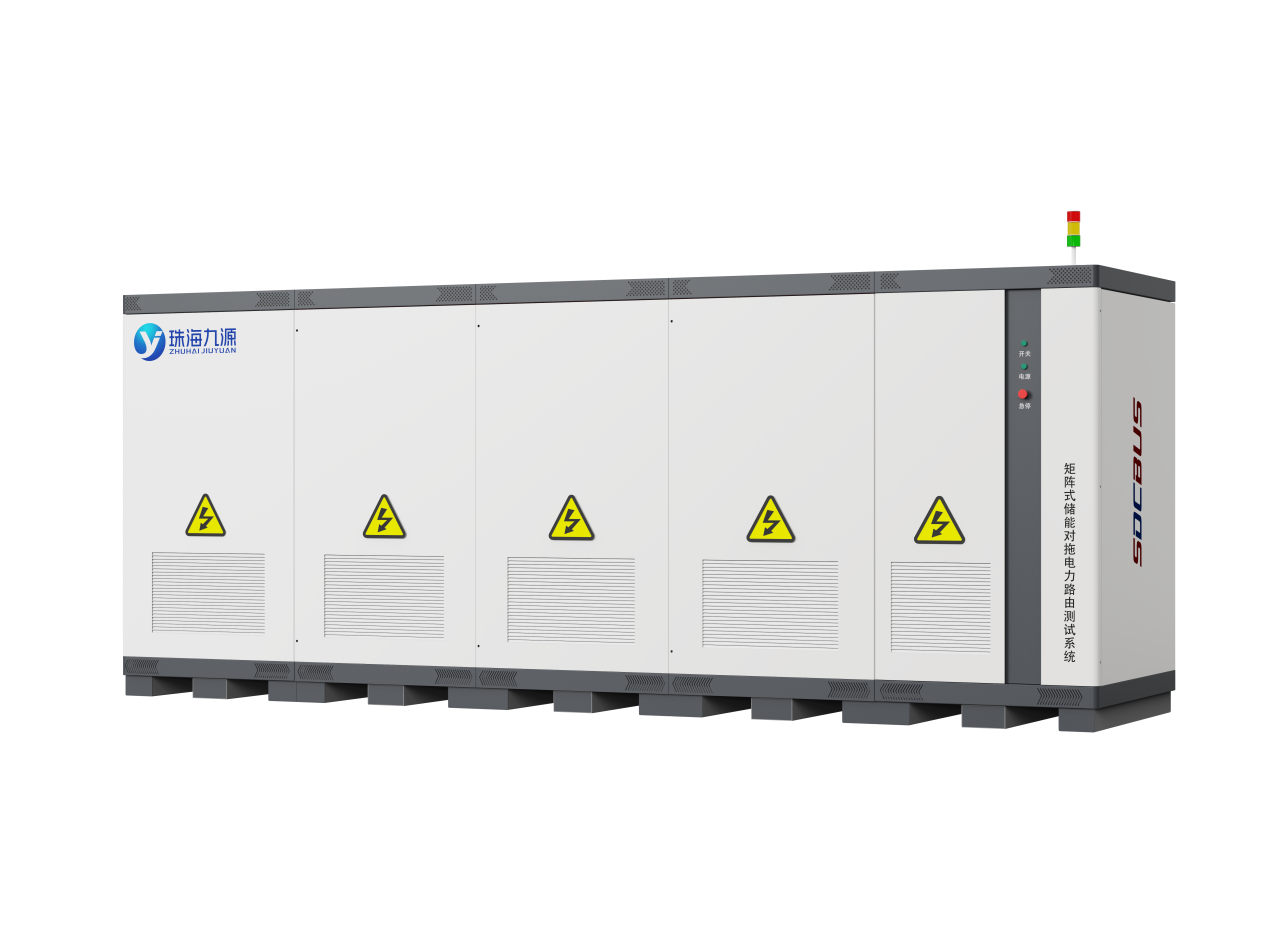
The global transition toward high-density, multi-megawatt energy storage networks requires massive advancements in laboratory validation infrastructures. As commercial battery PACK designs scale up to thousands of volts and intricate parallel configurations, static or rigid hardware configurations no longer suffice. Engineering teams need a system that can dynamically reallocate its testing channels to accommodate diverse voltage, current, and power profiles without rewiring physical cables. This demand has led to the widespread adoption of highly scalable, advanced validation platforms. Choosing a high-performance matrixtype energy storage test system equipment infrastructure allows research institutions and manufacturing teams to achieve complete testing flexibility, optimizing equipment utilization while collecting impeccable engineering data.
Transitioning from Rigid Single-Channel Testers to Dynamic Matrix Allocation Platforms
Traditional testing methodologies require hard-wired, fixed connections for each distinct battery pack setup, causing considerable downtime whenever engineering parameters shift. At Zhuhai Jiuyuan Power Electronic Technology, our technical focus centers exclusively on multi-channel integrated performance testing systems rather than manufacturing standard power supplies. A modern matrixtype energy storage test system equipment setup operates on a highly flexible, switchable network architecture.
Instead of treating each power module as a closed, standalone unit, a matrix configuration treats individual hardware channels as independent, floating power nodes. These nodes can be electronically grouped, stacked in series to multiply voltage thresholds, or paralleled to scale up current capabilities instantly through software control. By prioritizing intelligent matrix allocation over traditional fixed wiring, R&D facilities can effortlessly transition a single testing bay from validating high-voltage commercial battery PACKs to evaluating medium-power microgrid modules within seconds, dramatically accelerating product development timelines.
Achieving Elite Five-Ten-Thousandths Measurement Precision Under Variable Array Layouts
When multiple high-power testing modules are dynamically combined in a matrix array, maintaining tracking synchronization and data integrity becomes immensely challenging. Minor timing delays or hardware imperfections across aggregated modules can lead to measurement drift, rendering long-term degradation analysis or complex DC Internal Resistance (DCIR) calculation completely inaccurate.
To eliminate these validation discrepancies, our multi-channel matrix platforms maintain an exceptional voltage and current measurement accuracy of ±0.05% (five-ten-thousandths) across all operational configurations. Whether a channel is operating independently or grouped with a dozen other modules to form a high-power testing cluster, the system delivers razor-sharp tracking. This elite precision is backed by true four-quadrant bidirectional power processing, ensuring smooth, continuous energy recovery back to the facility grid during deep discharge testing. This mathematical stability is critical for generating reliable compliance reports that global utility operators demand.
Ensuring Uncompromised Signal Integrity via Resilient Noise-Immune Communication Buses
Operating multi-channel power matrices generates severe high-frequency electromagnetic interference (EMI), particularly when shifting heavy loads at millisecond speeds. In these intense laboratory testing environments, using consumer-grade data connections like USB is highly dangerous. Standard USB cables lack the shielding needed to block heavy ambient electrical noise, which can result in sudden data dropout, corrupted log files, and disrupted long-term lifecycle test scripts.
To safeguard valuable engineering metrics from ambient noise, our matrix validation platforms completely skip USB connections in favor of highly robust industrial fieldbuses. The system combines native CAN (Controller Area Network) communications with rapid Daisy Chain architectures to lock all distributed power modules into sub-millisecond synchronization. Reinforced by industrial RS485, RS232, and Modbus (RTU/TCP) protocols, this multi-layered communication framework guarantees flawless data routing between the hardware layers and the analytical control software, ensuring safety commands are executed instantly during multi-channel operation.
Maintaining Strict Application Limits and Defining True Specialized Testing Boundaries
To deliver top-tier data fidelity and performance safety, the operational boundaries of our technology must be clearly defined. Our industrial testing ecosystem is strictly engineered for high-voltage battery PACK-level performance verification, utility-scale power conversion system (PCS) adaptability testing, microgrid asset simulation, and comprehensive capacity characterization.
By keeping our engineering focus purely on system-level validation, we purposefully exclude individual battery cell testing (cell testing) from our matrix capabilities. Furthermore, our performance platforms are not designed for, and cannot be integrated into, general factory industrial automation assembly lines, consumer-grade UPS networks, or low-voltage industrial variable frequency drives (VFDs). Our equipment cannot be applied to the calibration of generic automated factory tools or general industrial electronics. This dedicated specialization isolates our matrix testing environments from unrelated electrical transients, ensuring all captured data metrics represent true, uncorrupted system-level battery performance.
Practical Engineering Triumphs in Multi-Channel Commercial PACK Testing Applications
Meeting stringent international utility standards requires empirical, laboratory-controlled evidence under intense operational stress. Recently, our technical support engineers deployed our specialized JHT matrix performance system to help a leading commercial energy storage developer validate a multi-tiered 1500V liquid-cooled battery PACK system.
The client needed to execute simultaneous capacity validation and rapid pulse discharge tests across multiple parallel strings, a task that would require multiple distinct machines under traditional setups. By leveraging our matrix-switching architecture, the team electronically paired multiple testing channels to deliver the massive, synchronous current required for the high-power pulse sequence. The platform maintained full ±0.05% precision throughout the intense multi-hour thermal cycle, capturing high-fidelity voltage and current curves without a single packet drop over the CAN and Daisy Chain bus. This streamlined process allowed the client to complete their full pre-compliance testing sequence ahead of schedule, avoiding expensive certification delays.
Investing in Scalable Testing Architecture for Sustainable Global Market Growth
As global grid regulations tighten and energy densities continue to climb, choosing a rigid, non-scalable testing setup creates a major bottleneck for forward-thinking engineering teams. Global procurement managers should focus on high-power testing platforms that provide true four-quadrant bidirectional power recovery, stable ±0.05% tracking precision across dynamic channel arrays, and native support for heavily shielded industrial communication protocols. Partnering with a dedicated specialist focused entirely on advanced performance testing systems ensures your energy storage assets remain perfectly optimized, fully compliant, and ready for rapid global market deployment.
Conclusion
Matrix-type testing systems represent the future of agile, high-efficiency energy storage validation. By combining the raw power of multiple independent modules into a software-controlled, highly precise array, these platforms provide manufacturers with the exact technical flexibility, safety, and data fidelity needed to conquer the global energy market.
Table of Contents
- Transitioning from Rigid Single-Channel Testers to Dynamic Matrix Allocation Platforms
- Achieving Elite Five-Ten-Thousandths Measurement Precision Under Variable Array Layouts
- Ensuring Uncompromised Signal Integrity via Resilient Noise-Immune Communication Buses
- Maintaining Strict Application Limits and Defining True Specialized Testing Boundaries
- Practical Engineering Triumphs in Multi-Channel Commercial PACK Testing Applications
- Investing in Scalable Testing Architecture for Sustainable Global Market Growth
- Conclusion