
 EN
EN
Introduction: The Critical Role of ESS Safety Testing
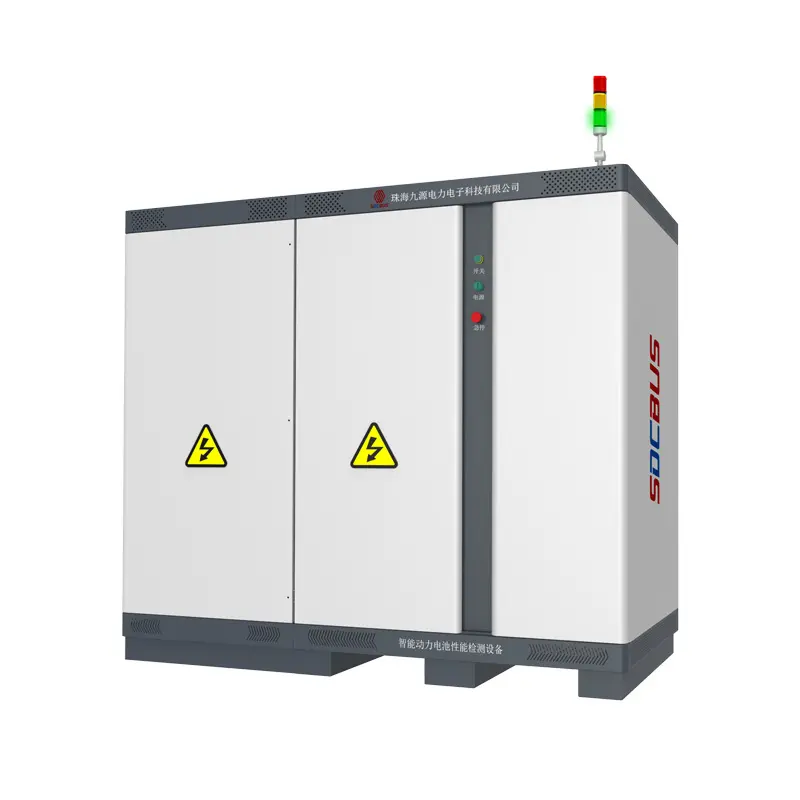
Energy Storage Systems (ESS) are pivotal to global renewable energy adoption, ensuring grid stability and integrating solar/wind power. However, safety hazards like thermal runaway or short circuits can have catastrophic consequences, making rigorous safety testing indispensable. The ess testing power supply for safety test is a specialized tool that validates ESS reliability, not a conventional power source.
Drawing from 20 years of battery testing experience, we once helped a grid-scale ESS developer identify a BMS flaw via targeted safety testing—one that could have caused thermal runaway. This aligns with strict standards like IEC 62933, which mandate comprehensive ESS safety validation to mitigate risks.
Core Objectives of ESS Safety Testing
ESS safety testing focuses on verifying system resilience against key hazards:
- Overcharge/over-discharge protection: Ensuring BMS and circuits prevent cell damage from improper charging/discharging.
- Short-circuit safety: Confirming fast response of fuses or isolation mechanisms to avoid fires.
- Thermal stability: Testing performance under extreme temperatures or thermal abuse to prevent runaway.
- Environmental resilience: Validating resistance to moisture, vibration, or impact for harsh deployment conditions.
These objectives are both regulatory requirements and critical for long-term ESS reliability.
The Key Role of ESS Testing Power Supply
The ess testing power supply for safety test is engineered to simulate dynamic, extreme electrical scenarios—unlike standard power sources. Its core functions include:
- Replicating grid faults (voltage sags/swells) to test ESS disconnection safety.
- Enabling controlled abuse testing (e.g., forced overcharging) to assess system limits.
- Capturing real-time data (voltage, current, temperature) to detect latent risks like slow BMS response.
It bridges the gap between design and real-world performance, ensuring ESS meet the highest safety standards.
Core Features of High-Quality Testing Equipment
Top-tier ESS safety testing tools offer critical attributes without industrial automation or UPS functionalities:
- Precision: ±0.1% V voltage accuracy and ±0.001Hz frequency stability for accurate scenario simulation.
- Reliable communication: CAN, Daisy Chain, RS485, or Modbus protocols for anti-interference and multi-device networking.
- Energy efficiency: Bidirectional power flow technology reduces energy loss by up to 90%.
- Compatibility: Supports diverse ESS configurations (kWh to MWh scale, various cell chemistries).
Best Practices for ESS Safety Testing
To ensure effective testing:
Regular calibration: Quarterly checks against traceable standards to maintain precision.
Standardized procedures: Adhere to IEC 62933 or local regulations for consistent, credible results.
Controlled environment: Test in 20-25°C chambers to avoid environmental interference.
Operator training: Ensure proficiency in equipment use and safety protocols to prevent errors.
Conclusion
ESS safety testing is non-negotiable for renewable energy transition, and the ess testing power supply for safety test is a cornerstone of this process. It validates ESS resilience against hazards, ensuring compliance and reliability.
At Zhuhai Jiuyuan, our solutions leverage 20 years of expertise, 80+ patents, and industrial-grade features to meet diverse ESS testing needs. By prioritizing precision, safety, and practicality, we empower clients to deploy safer, more resilient energy storage systems—supporting a sustainable energy future.