
 EN
EN
Understanding the Final Checkpoint: Why EOL Testing is Non-Negotiable
In the high-stakes domain of electrified transportation and stationary energy storage, the battery module represents a critical and valuable component. Its performance, safety, and longevity directly impact the overall system's reliability. This is where the End-of-Line (EOL) Testing System becomes indispensable. Think of it as the final, comprehensive physical and report card for every battery module before it leaves the factory. It's not merely a quality check; it's a guarantee. This procedure validates that each module meets all specified design parameters, functions safely within its intended operating window, and is free from the defects that could lead to premature failure or safety incidents in the field. For manufacturers, skipping rigorous EOL testing is a significant business and reputational risk, as a single faulty module can compromise an entire battery pack or system.
The Core Pillars of a Comprehensive EOL Test
A robust Battery Module EOL Testing procedure is built on several foundational tests, each probing a different aspect of module health and capability. Based on extensive industry experience, a complete regimen typically includes:
- Electrical Performance Validation: This is the first and most critical suite of tests. It involves applying precise charge and discharge cycles to the module to measure its key parameters: Capacity (to ensure it meets the rated energy storage), Open Circuit Voltage (OCV) and Voltage Consistency between cells (to identify imbalances), and Internal Resistance (a key indicator of health and power capability). High-precision equipment is essential here to capture subtle variations that might indicate underlying issues.
- Insulation Resistance and Withstand Voltage Test (Hi-Pot): Safety is paramount. This test verifies the integrity of the electrical insulation between the module's live parts and its casing or chassis. A high-voltage potential is applied to check for any leakage current, ensuring there is no risk of electrical shock or short circuit under normal and fault conditions.
- Communication and Battery Management System (BMS) Verification: Modern modules integrate a BMS for monitoring and management. The EOL test must establish flawless communication with this BMS via industry-standard protocols like CAN (Controller Area Network), RS485, or Modbus. The test system reads and validates critical data points—such as cell voltages, temperatures, and state of charge—reported by the BMS, ensuring the "brain" of the module is functioning correctly. Daisy-chain communication topologies are often evaluated here for system integration readiness.
- Thermal Behavior and Thermal Runaway Prevention Check: While not a full thermal runaway inducement test at the EOL stage, the procedure monitors temperature sensors and the BMS's response to simulated thermal events. It ensures that temperature readings are accurate and that the BMS can properly execute pre-programmed safety protocols, such as disconnecting the module, if thresholds are exceeded.
How an Advanced Testing System Executes These Procedures
A sophisticated Battery Module EOL Testing System automates and sequences these tests with precision and efficiency. The typical workflow begins with the automated handling system placing the module onto the test fixture, which makes secure electrical and communication connections. The system controller then orchestrates the entire sequence:
It initiates communication with the module's BMS via CAN bus or RS232/485 links, establishing a data channel.
It performs the insulation and Hi-Pot tests for safety clearance.
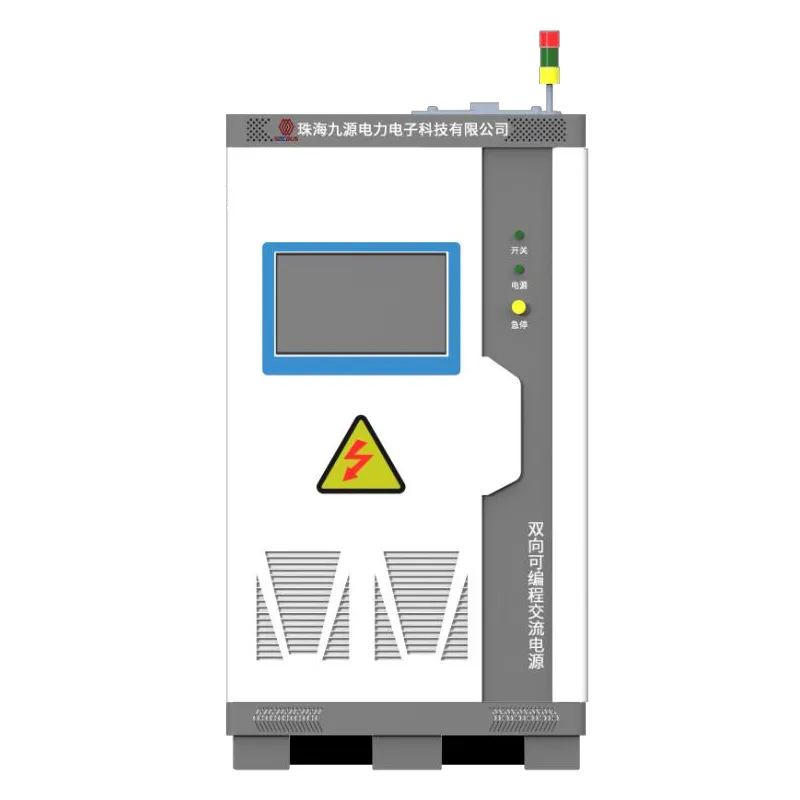
It executes a predefined charge-discharge profile using a high-precision, regenerative DC load/discharge unit (or bidirectional regenerative test channel. This profile measures capacity, maps voltage curves, and calculates internal resistance. The "regenerative" feature is crucial, as it feeds most of the discharge energy back to the grid or to other modules under test, slashing operational power costs and heat generation.
Throughout the test, it continuously polls data from the BMS over the daisy-chained or point-to-point communication network, logging cell voltages and temperatures to verify the BMS's monitoring accuracy.
Finally, it compiles all data, compares each parameter against pass/fail limits, and generates a detailed test report for the module. Any module falling outside specifications is automatically flagged for review.
The Tangible Benefits of a Robust EOL Testing Process
Implementing a thorough EOL testing strategy with a high-performance system delivers clear, multi-layered value. Primarily, it ensures product safety and quality, catching defects before they reach the customer, which protects brand reputation and reduces warranty costs. Secondly, it generates a wealth of data for process control and continuous improvement, helping identify trends in manufacturing variability. Thirdly, the automation and speed of a dedicated system significantly boost production line throughput compared to manual or piecemeal testing. Furthermore, the energy-recirculating design of advanced testers leads to dramatic reductions in electricity consumption and heat load in the test facility, lowering operational expenses. Ultimately, a reliable EOL test report serves as a certificate of conformity that builds trust with integrators and end-users, demonstrating a commitment to excellence and reliability in every battery module shipped.