
 EN
EN
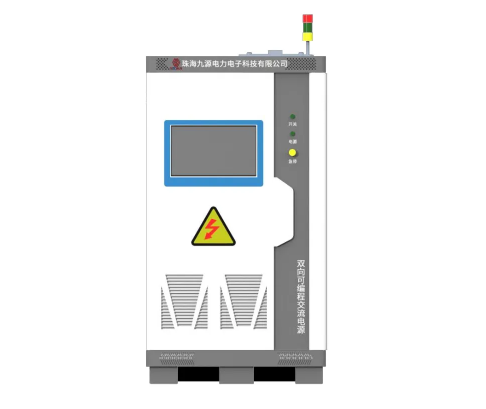
As industrial digitalization and smart manufacturing advance, the demand for stable, flexible, and rapidly adjustable power solutions has never been greater. This is where programmable power comes into play. But what exactly is programmable power, and how is it driving innovation and efficiency across various sectors? This article explains the core concepts and highlights the industrial value of advanced systems like the JHL Series Bidirectional Programmable AC Power Supply (BPAC) from Zhuhai Jiuyuan Power Electronics Technology Co., Ltd.
Part 1: What is Programmable Power? Key Benefits
Programmable power, or a programmable power supply, is an advanced electrical instrument that allows users to digitally set, adjust, and control power parameters such as voltage, current, frequency, and waveform. Unlike conventional fixed-output power sources, programmable power supplies offer three major advantages that make them essential in modern applications:
- Flexibility: They can simulate a wide range of power conditions such as stable grid voltage, sudden drops, or frequency fluctuations enabling users to test how devices perform under different scenarios.
- Precision: These systems provide highly accurate and stable output, ensuring reliable test results and supporting quality assurance in manufacturing and R&D.
- Intelligence: With support for automated control and real-time monitoring, programmable power supplies reduce manual intervention, improve repeatability, and enhance operational efficiency.
The JHL Series BPAC goes a step further by incorporating bidirectional energy flow. While standard programmable supplies deliver power in one direction, the JHL Series can both supply and absorb energy. This means it can act as a power source or a load, feeding excess energy back to the grid instead of dissipating it as heat. This drastically improves energy efficiency and reduces operating costs.
In short, programmable power is not just an improved power source it is an adaptable, smart system designed to meet diverse and dynamic industrial requirements.
Part 2: Key Advantages of the JHL Series BPAC
The JHL Series BPAC tackles big industrial headaches like high energy costs, unreliable test results, and safety worries. It stands out from other options in a few key ways that matter for real-world use.
1. Bidirectional Energy Flow Cuts Costs Through Energy Recycling
Traditional setups for power testing often let extra energy go to waste as heat. That not only means lost energy but also calls for extra cooling gear, which adds to costs. The JHL Series fixes this by catching and reusing that energy. For example, when testing things like solar inverters or running battery discharge cycles, it sends the energy that isn’t used back to the grid or local storage systems. This isn’t just a small saving industrial users can cut their energy use by 30 to 60%, which adds up to serious annual savings. And when it comes to testing battery packs to check different battery performance, this energy recycling also keeps the testing process more efficient, without wasting power while evaluating how well batteries hold up.
2. High Precision Supports Reliable Testing in Key Fields
Even tiny power fluctuations can mess up test results, harm expensive equipment, or lead to products that don’t meet standards. That’s a big problem, especially for areas like battery pack performance testing, laboratory research, and work in new energy fields like photovoltaics and energy storage—all of which need top-notch precision. The JHL Series delivers that precision: voltage and current deviation is as low as plus or minus 0.1%, and frequency stays stable within 0.01Hz. This level of accuracy makes sure that when testing battery packs to compare different battery performance, the results are trustworthy. It also helps in laboratory R&D where every detail counts, and in new energy projects like checking solar inverters or energy storage systems, making sure all tests are reliable and meet the strict demands of these fields.
3. User Friendly Features and Strong Safety Protections
Even with all its advanced abilities, the JHL Series is designed to be easy to use, and it comes with great safety features. On the user-friendly side, it has a software system that’s a big plus, offering multiple communication interfaces including Daisy Chain, RS485 (with Modbus protocol), RS232, and LAN (Local Area Network), while also supporting DBC file export. This makes it simple to connect with other testing tools and share data seamlessly. It also works with SCPI commands, enabling smooth integration into automated testing systems for scenarios like laboratory testing—no extra adaptation is needed. For day-to-day use, there’s an intuitive digital interface to set parameters quickly; for tests that need to be repeated, it also supports computer-controlled automation, which saves time and reduces errors caused by manual operation.
When it comes to safety, it doesn’t stop at basic protections. It has a multi-mode protection system, including an emergency stop function, and guards against over-voltage, over-current, and short-circuits. It also keeps an eye on output power, temperature, and other key metrics in real time. All these features let technicians operate the system safely and efficiently, cutting down on downtime and mistakes from human error whether they’re running tests in a lab, checking battery pack performance, or working on new energy projects.
Part 3: Industrial Applications of Programmable Power
Programmable power supplies are really versatile tools, finding use in all sorts of industries. When it comes to the JHL Series BPAC, there are three key industrial areas where it brings outstanding value, perfectly matching the needs of different professional scenarios.
1. Application in the Renewable Energy Sector
In the renewable energy field, devices like solar inverters, energy storage converters (PCS), and battery energy storage systems need strict testing under all kinds of changing conditions. The JHL Series is a great fit here—it can handle both grid-connected and off-grid testing for these devices, and even verify the efficiency of MPPT (Maximum Power Point Tracking) systems. What’s more, during testing, it doesn’t let energy go to waste; instead, it recycles it. This not only helps manufacturers check if their products perform well and meet grid connection standards but also cuts down on energy waste, making the whole testing process more cost-effective.
2. Application in the Electric Vehicle Industry
The electric vehicle industry has unique testing needs, and the JHL Series steps up to the plate here too. It’s used to test important components like on-board chargers (OBC), motor drive systems, and charging piles. For these parts, checking charge and discharge performance is key—and that’s exactly what this series does well. By running these tests, it makes sure that the components work reliably in real-world use, which in turn helps electric vehicles perform better and be safer on the road.
3.Application in Laboratory R&D
Laboratories doing research and development work often need to simulate extreme power conditions, and the JHL Series is up to the task. It can mimic grid disturbances, voltage fluctuations, and other harsh working conditions that devices might face. This lets researchers test how new equipment or prototypes hold up under these tough scenarios, verifying their reliability and compatibility. Also, with its high precision and flexible control, it gives researchers accurate data to work with, helping speed up the development of new technologies and products.