
 EN
EN
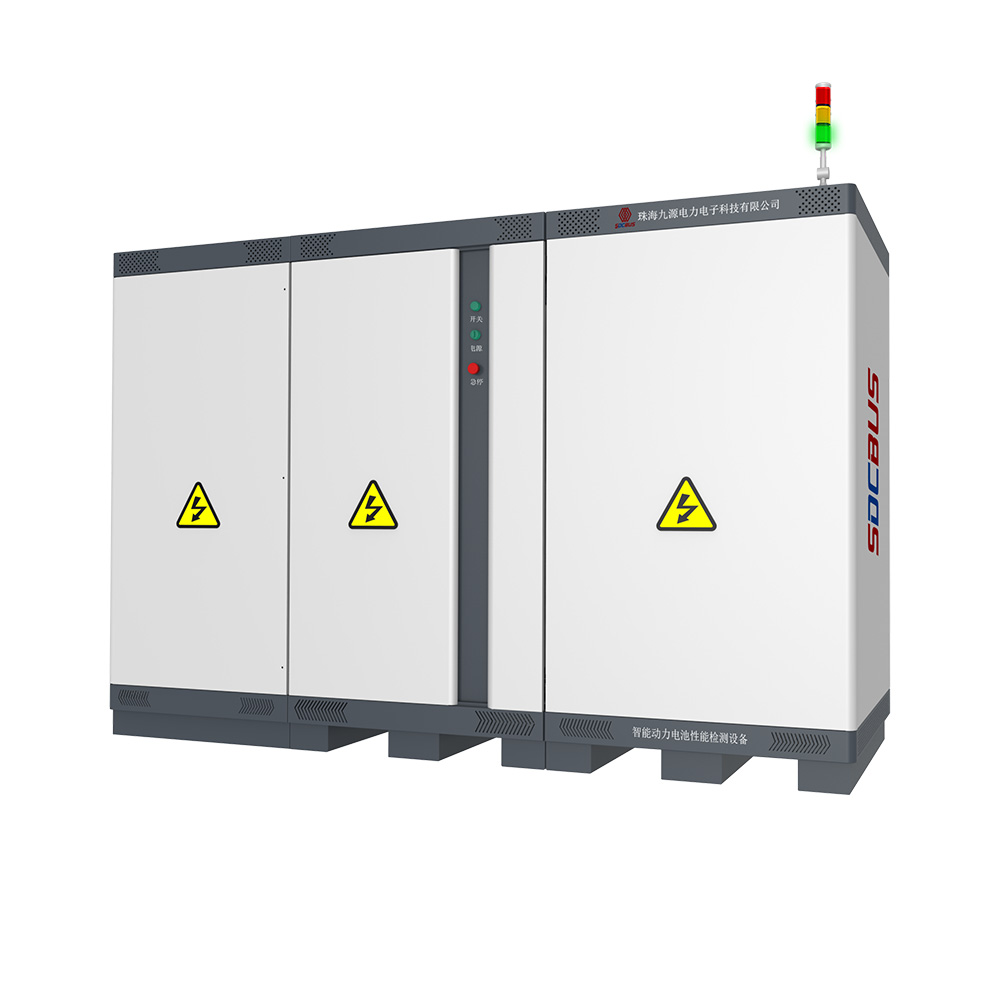
Knowing how much capacity a rechargeable battery can hold matters a lot. Different rechargeable batteries store different amounts of energy, so figuring out exactly how much power they can provide to run a device is a key point. It also tells you how long the battery can keep a device running and how well it can be recharged. But here’s the thing—none of this information is useful if the test results for the battery’s capacity aren’t accurate. This article will walk you through the step-by-step process of doing accurate battery capacity tests, using equipment from Jiuyuan Tech's SDCBUS Series Power Battery Performance Testing Devices.
Why Accurate Battery Capacity Testing Matters
Finding out the capacity of a rechargeable battery is a big deal. Since different rechargeable batteries store different amounts of energy, knowing exactly how much power they can supply to run a device is extremely important. It also lets you know how long the battery can power a device and how well it can be recharged. However, all this info means nothing if the test results measuring the battery’s capacity aren’t accurate. This article will guide you through the step-by-step process of conducting accurate battery capacity tests, using equipment from Jiuyuan Tech's SDCBUS Series Power Battery Performance Testing Devices.
What is Battery Capacity
If you don’t know a battery’s capacity, comparing it to a 5,000 mAh battery is meaningless. A battery is only considered to have a certain capacity if it can run a rechargeable device for the corresponding duration. For example, a battery is said to have 5,000 mAh capacity only if it can power a device for one hour. A battery’s capacity performs best under different parameters, such as varying temperatures, output values, and the battery’s age.
The accurate methods for testing battery capacity follow a step-by-step process: first, overcharge the battery, then discharge it at a slow rate. The whole procedure relies on leaving the device running for a specific period and measuring the output energy along with the battery’s capacity. But any procedure has rules that must be followed.
Preparing for Testing and Understanding Battery Chemistry
If the battery is new and unused, most experts recommend doing 1 to 2 charge-discharge cycles first. This helps stabilize the chemical reactions inside the battery, making the subsequent capacity measurements more accurate.
When setting up the test area, ensure it’s of the right size with good air circulation. Have fire-resistant containers ready and keep personal protective equipment (PPE) within easy reach—this is especially important when testing high-power batteries, like those used in cars. Skipping these safety steps could put you and others in danger.
Temperature control is also crucial for accurate results. Usually, testing batteries at 25°C (±2°C) gives the most reliable data. Higher temperatures can make the capacity reading much higher than the actual value, so it’s essential to keep the temperature stable during the test.
Fully Charging the Battery
It’s best to use an XY coordinate graph to show the constant voltage and constant current during our testing. Follow the CC-CV (Constant Current-Constant Voltage) procedure without any modifications.
At this stage, it’s important to understand these batteries and how to use them correctly. Charging isn’t complete until the charging current reaches or exceeds the “cutoff level”. You can easily calculate this by first determining the current needed to fully charge the battery. For example, if it takes 1 amp to fully charge the battery, you need to charge it in stages and reduce the current to 0.1 amp once it reaches 1 amp—this is called the quiescent current. Note that using a timer is not only difficult but also makes the charging process longer. In this situation, a programmable power supply is necessary.
The Rest Period
After charging is finished, the next step is the rest period, also known as post-charging balance, which usually lasts 1 to 2 hours. This break is very important because it allows the internal chemical reactions to stabilize and the voltage to settle (even during these 1 to 2 hours, the voltage during the rest period may still fluctuate slightly). This, in turn, ensures the accuracy of the subsequent discharge test results.
The Controlled Discharge (The Most Critical Step)
This is the most crucial step in the entire process. The following steps must be followed carefully and accurately; otherwise, most errors in the whole procedure will occur at this stage.
Use Constant Current (CC) Discharge: The discharge current must remain unchanged throughout this step, even during the constant current discharge process.
Choose the Correct Discharge Rate (C-rate): Battery capacity can vary with the discharge rate. Remember, for your test results to be meaningful and repeatable, you must specify the C-rate used.
The voltage at which discharge stops is called the discharge cutoff voltage. This voltage should be recorded as it is. Discharge the battery until it reaches the minimum safe voltage specified in its datasheet. Rushing or forcing the discharge process beyond this voltage can damage the battery and affect the accuracy of test results.
During short-term discharge periods, it’s easy to lose track of the current. So, recording the time and current accurately is the most basic and important part of calculating battery capacity.
Calculation and Analysis
You can refer to the system diagram of the charge-discharge testing equipment on the company’s website. The software that comes with the equipment has a clear interface, and the upper computer page can display data intuitively. Most modern systems can automatically calculate the total ampere-hours (Ah) discharged by integrating the current over time. Other systems can generate discharge curves (showing voltage over time), and all these systems can provide more advanced data related to battery health and performance, such as discharge voltage and time curves.
Why Specialized Equipment is Non-Negotiable
While you can perform a no-load test using a simple system with a multimeter, you can’t guarantee the accuracy of the test without proper equipment. Jiuyuan Tech's SDCBUS Series integrates all the functions needed for accurate battery capacity testing, making it an indispensable tool.
High-Precision Measurement Yield
With the SDCBUS Series, the voltage and current measurement results of key devices reduce capacity measurement errors. Using the SDCBUS Series means you don’t need to use separate advanced measurement systems available on the market.
The entire process of charging, intermittent charging pauses, and subsequent discharging is automated, eliminating human errors. Every test can be repeated consistently, making the system highly reliable for accurate capacity testing.
Integrated Regenerative Load
Unlike simple resistive loads that waste energy as heat, the SDCBUS Series acts as a regenerative DC electronic load. It can absorb the discharge energy, convert it into AC power, and feed it back to the building’s power grid. This feature makes long-term, high-power testing much more energy-efficient and cost-effective.
Data Logging and Analysis
Throughout the system’s operation, data is continuously logged. This makes it possible to generate reports and analyze voltage curves to identify potential battery degradation issues—even when you only need the basic capacity value.
3 Frequently Asked Questions (FAQs)
Q1: How long does a full battery capacity test take?
The test time mainly depends on the discharge rate. Testing at a 1C discharge rate (which discharges the full capacity in one hour) takes about an hour, plus the time needed for charging and resting. A gentler 0.5C discharge rate takes 2 hours. Considering the entire cycle of charging, resting, and discharging, a single test typically takes 3 to 8 hours, which is a realistic timeframe.
Q2: Why does my new battery not reach its advertised capacity?
First, make sure you’re testing it correctly with professional equipment. Most reputable manufacturers rate battery capacity based on specific ideal conditions (such as discharging at 0.2C at 25°C). Other conditions, like a high discharge rate or lower temperatures, will result in a lower capacity reading. Additionally, some batteries need several charge-discharge cycles to reach their maximum capacity.
Q3: Can I use this equipment for all battery types?
Yes, systems like the SDCBUS Series from Jiuyuan Tech are very versatile. They work with various battery chemistries, including Lithium-ion (Li-ion), Lithium Iron Phosphate (LFP), Nickel-Metal Hydride (NiMH), lead-acid batteries, and flow batteries. The key is to set the appropriate voltage limits, current rates, and termination conditions for each specific battery type. Note that this equipment is not used for testing individual battery cells.
Table of Contents
- Why Accurate Battery Capacity Testing Matters
- What is Battery Capacity
- Preparing for Testing and Understanding Battery Chemistry
- Fully Charging the Battery
- The Rest Period
- The Controlled Discharge (The Most Critical Step)
- Calculation and Analysis
- Why Specialized Equipment is Non-Negotiable
- High-Precision Measurement Yield
- Integrated Regenerative Load
- Data Logging and Analysis
- 3 Frequently Asked Questions (FAQs)