
 EN
EN
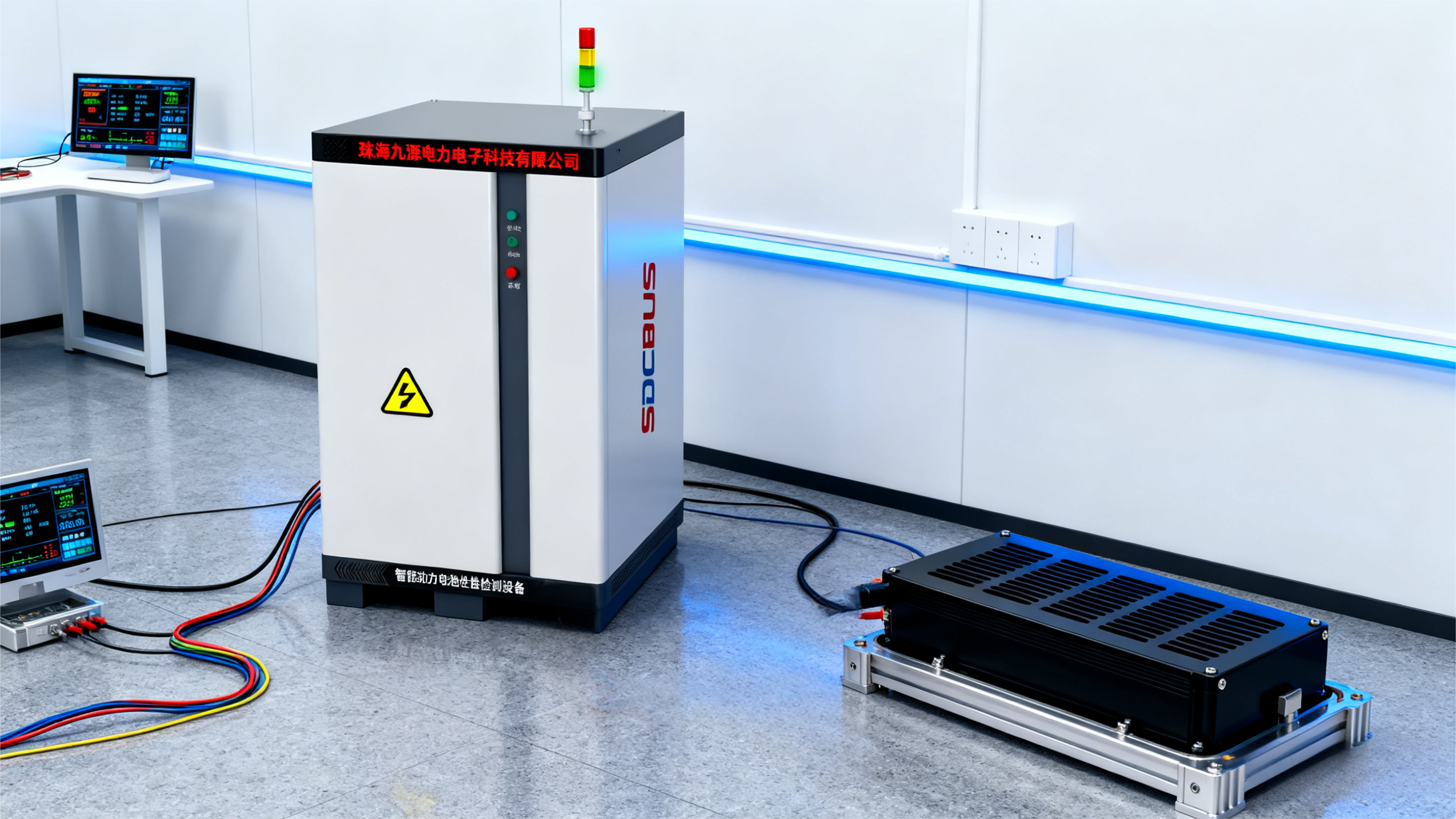
Defining the Programmable DC Power Source
A programmable DC power source is a high-precision electronic instrument designed to deliver a direct current (DC) output where voltage and current can be precisely controlled, adjusted, and varied over time via software or digital commands. Unlike a traditional fixed power supply, a programmable source allows engineers to create dynamic output sequences and simulate real-world electrical conditions.
Think of it as a "smart" diagnostic tool. For example, it can be instructed to gradually increase voltage from 0V to 50V over 10 seconds, hold it steady, and then drop it rapidly to test a device's reaction. This flexibility makes it an indispensable tool for performance testing in sectors such as battery manufacturing and energy storage system validation.
Core Advantages in Performance Testing
What sets a programmable DC power source apart from a conventional bench power supply? For a performance testing specialist like Zhuhai Jiuyuan Power Electronic Technology, the value lies in four key areas:
- ● Precision: High-resolution settings (e.g., 1mV/0.1mA steps) ensure the device under test (DUT) receives the exact stimulus intended.
- ● Repeatability: Digital parameters allow the same test sequence to be run hundreds of times with identical results—essential for quality assurance.
- ● Dynamic Response: These sources can change output at high speeds, allowing us to simulate transient events like voltage dips.
- ● Automation: They integrate into automated test systems (ATE), controlled via host computers for synchronized data logging.
Essential Communication Interfaces: CAN, Daisy Chain, RS485, Modbus
Modern performance testing relies on robust, interference-resistant communication protocols. While consumer-grade units might use USB, professional test systems demand the reliability of industrial interfaces. Our testing platforms emphasize the following:
- ● CAN (Controller Area Network): Ideal for battery management systems (BMS) due to high noise immunity.
- ● Daisy Chain: Multiple units can be linked to share a single connection, allowing synchronized control of dozens of channels for large-scale testing.
- ● RS485 & RS232: Differential and serial buses that support stable communication over long distances on the factory floor.
- ● Modbus (RTU or TCP): An open protocol that enables our test software to command sources and read actual output values seamlessly.
Practical Applications and Expertise
At Zhuhai Jiuyuan Power Electronic Technology, we utilize these advanced tools to evaluate a wide range of electrical products. Please note: we do not manufacture or sell power supplies; we provide professional testing services and integrated systems. Furthermore, our solutions are not intended for industrial automation, UPS systems, frequency converters, or precision industrial instrument inspection. We also do not support individual battery cell testing (cell testing).
One representative application is BMS Validation via Simulation. Instead of using dangerous real cells, we use programmable DC power sources to emulate individual cell voltages. By daisy-chaining 16 units via CAN, we can simulate over-voltage, under-voltage, and imbalance conditions safely and repeatably. This allows us to identify hidden flaws in a BMS's balancing algorithm that a simple fixed supply would never reveal.
Why Trust Our Testing Expertise?
We are test engineers who have used programmable DC power sources on hundreds of projects. Our expertise lies in developing automated test sequences that run 24/7 and providing transparent reports that show raw data and uncertainty budgets. We offer the knowledge and infrastructure to use these precision tools effectively for high-standard performance validation.