
 EN
EN
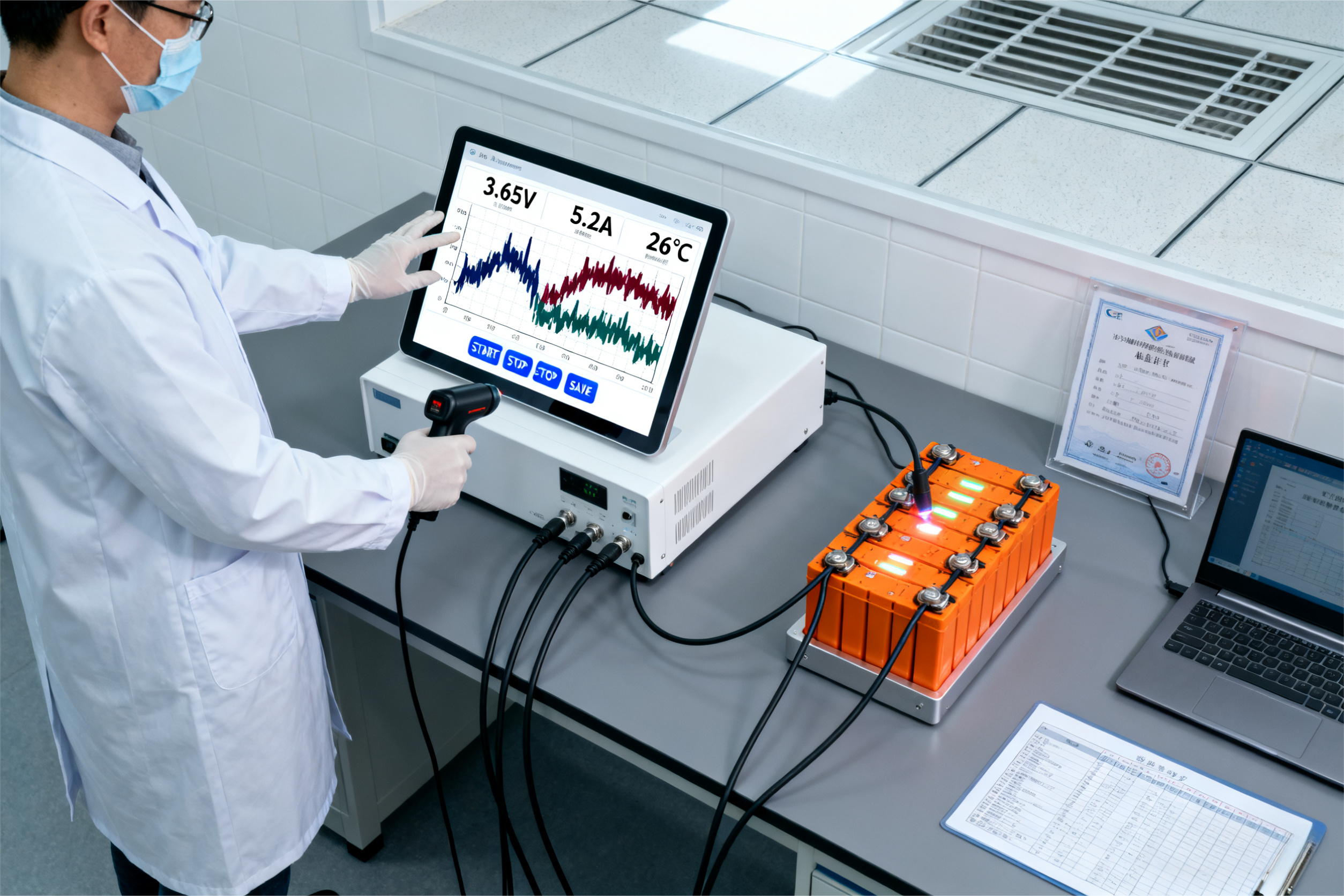
A battery testing system helps measure and analyze performance, safety, and reliability when there are changes and variations to a battery. Testing systems help validate batteries used in electric vehicles, consumer electronics, and industrial equipment to help in diagnosing potential risks and safety hazards of a battery.
A battery testing system is not a power supply. A battery testing system generates specific conditions using charging, discharging, and cycling processes to help identify battery performance. Monitoring and control systems help determine and diagnose whether or not a battery meets the performance standards.
For systems like these, a variety of data analytics, as well as computational and systems hardware is used for analysis, battery performance, and transition phases for storage states. The goal for a battery testing system is to analyze the lifecycle of a battery and ensure its performance, safety, and reliability.
The Imperative for Testing Systems in Contemporary Energy Applications
The growth of new systems, especially of lithium-ion batteries, provide new challenges and provide new cycles for testing systems. From small electronics, like phones, to large scale energy storage systems, batteries are essential and the failures in testing and new systems pose high risk to safety and financially.
Innovative battery testing systems assess the performance of battery systems by evaluating critical parameters such as capacity, cycle life, efficiency, and internal resistance, and determining the stability of performance of the battery system under various operational conditions.
For instance, battery testing systems used for research and development of batteries for electric vehicles can mimic real-world scenarios of years of use by allowing the battery system to undergo thousands of charge and discharge cycles. Similarly, batteries used in renewable energy systems must be tested to ensure stable performance under variable loads and changing environmental conditions.
Rigorous testing is universally accepted in the industry as a critical component of any battery systems development. Organizations such as the International Electrotechnical Commission (IEC) which establish technical standards for safety and reliability in battery systems, as well as manufacturers, use battery testing systems to achieve these standards.
Functions of Battery Testing Systems
Modern battery testing systems are developed to perform a variety of critical tasks related to the evaluation of battery performance. These tasks provide a basis for engineers to work with data that is reliable and accurate, and that describes the performance of the battery in detail.
Charge and discharge testing is one of the more common testing processes. Charge and discharge cycles are controlled, and other parameters are monitored and measured, such as voltage, current, capacity, and energy efficiency. These parameters are critical for determining the operational performance of the battery, particularly in analogous circumscribed conditions.
One additional important function is testing a battery's cycle life. Because batteries gradually deteriorate over time, cycle life testing imitates the long term usage of the battery by repeatedly charging and discharging the battery. This allows engineers to evaluate the speed of the battery's capacity loss and forecast how long the battery will last.
Measuring the internal resistance of a battery is another equally important function. Internal resistance impacts how quickly power can be delivered to a system and how much heat is produced. If resistance is measured accurately, engineers can find manufacturing flaws and performance problems before they become too big of a problem.
Furthermore, Sophisticated systems support the collection and analysis of data, provided the engineers with the tools to observe several battery channels and creates elaborate performance documentation.
The testing battery systems' versatility
The testing battery systems' versatility is relevant to all fields that involve energy storage technology.
Test systems are used in the field of electric vehicles for the battery development stage, module validation, and production level testing and diagnostics. Safety and distance performance are improved by engineers using battery testing data.
Large batteries used for the storage of energy and the integration of renewable energy necessitate testing in the energy storage sector.
The performance and safety of the batteries used in smartphones, laptops, and wearables are evaluated by manufacturers of consumer electronics using testing systems.
Solid-state batteries and other innovative battery chemistries are in the area battery development and production systems, the engineers face obstacles regarding the precision of the measurements, the efficiency of the tests, and the management of data. The ultimate battery testing system has to guarantee the performance of all components without interruption for the duration of testing, which may extend over weeks or even months.
Multicell performance evaluations require engineers to study cells while capturing extensive records of thousands of cycles of cell performance. Precise measuring tools are essential for pinpointing signs of degradation as well as identifying early safety hazards.
Engineers can optimize designs for battery cells faster since modern testing environments can integrate data and are able to perform comparison testing of twenty unique battery cell designs.
What To Consider When Choosing Battery Testing Systems
There are many operational and technical factors to consider when selecting battery testing systems.
First, engineers need to consider the voltage and current parameters of their battery types. Different testing capabilities are important for small consumer batteries and large energy storage modules.
Measurement accuracy and stability are essential. Testing must be done at a high level in order to produce data that can be relied upon during research and assessments of quality.
Scalability and channel use are also important. Systems with a high level of configurability when it comes to channels may be used to test many batteries, and can vastly improve throughput to see the desired results.
Lastly, the ability to retrieve technical support and the quality of available software are important considerations to keep systems operational for extended periods.
Conclusion
The importance of a battery testing system cannot be understated when it comes to new battery research, development, and production. It helps engineers assess construction details, performance, longevity, efficiency, and safety, and systems evaluate all aspects of a battery.
The need for reliable testing only grows as energy storage systems advance. The latest systems provide the necessary data to refine battery safety, quality, and testing systems, as well as to improve innovation in the fields of consumer electronics, electric vehicles, and renewable energy.
The appropriate testing technology will guarantee performance assessment for research institutions and manufacturers. Batteries need to be optimized in light of the energy-driven needs of the world.