
 EN
EN
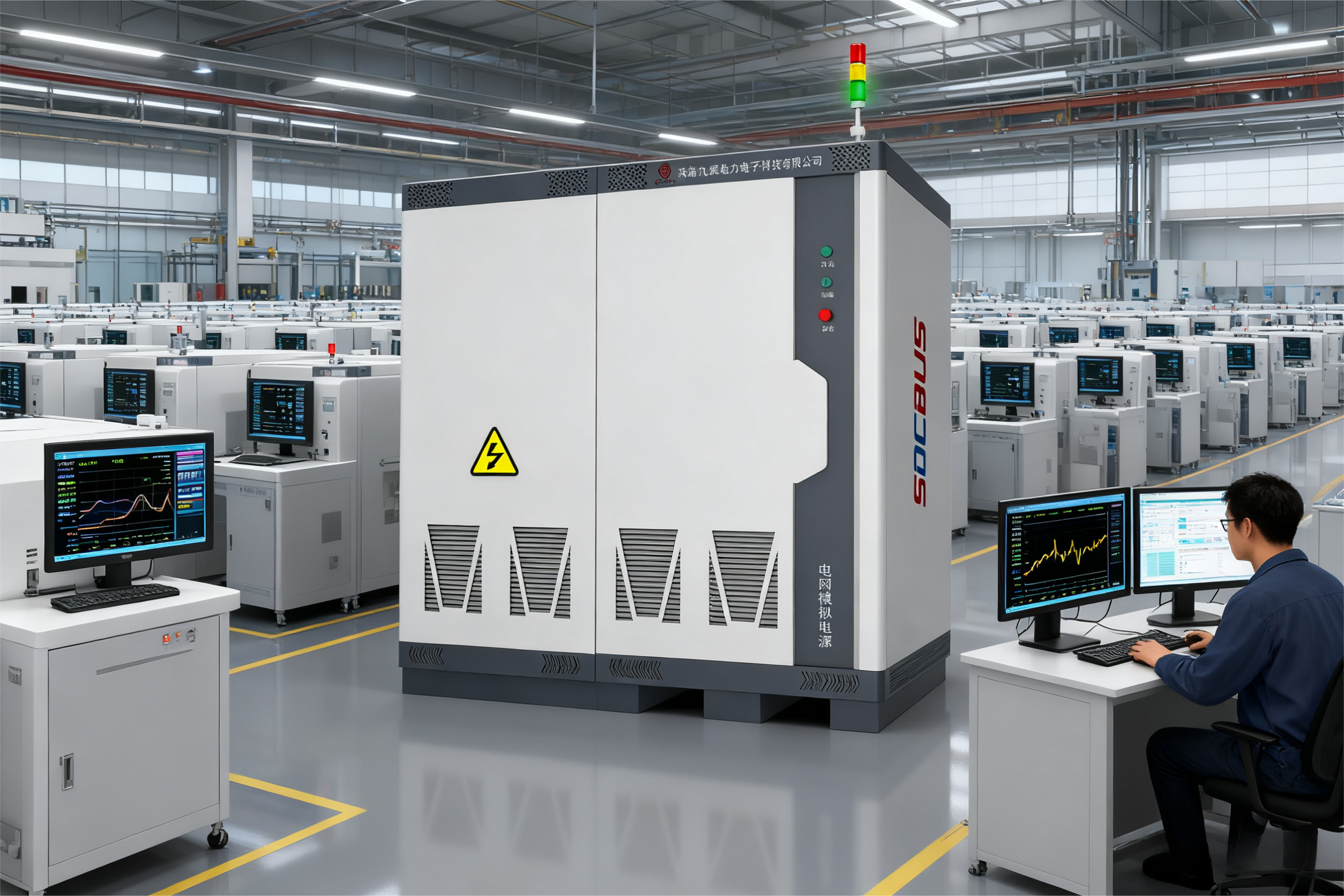
In the sophisticated world of energy system evaluation and high-precision performance testing, the equipment used to validate a product’s lifecycle is just as important as the product itself. For engineers and researchers dedicated to the performance testing of high-voltage battery packs, energy storage systems (ESS), and advanced power conversion units, the modular bidirectional power supply has redefined the standard for laboratory efficiency.
Unlike conventional power sources used in general manufacturing, these specialized instruments are designed to act as both a precise energy source and a regenerative electronic load. This dual-functionality is critical for testing environments where the Unit Under Test (UUT) requires both charging and discharging cycles under strict observation. By utilizing a modular architecture, testing facilities can achieve a level of flexibility, accuracy, and reliability that single-block systems simply cannot match.
Seamless Energy Transformation and Regenerative Efficiency in Testing
The core value of a modular bidirectional power supply lies in its ability to move energy in two directions with millisecond-level switching speeds. In a typical performance test for an electric vehicle (EV) battery pack, the system must simulate the high-power demand of rapid acceleration (discharging) and the energy capture of regenerative braking (charging). A bidirectional system handles both roles within a single chassis, eliminating the need for a separate DC source and a heavy electronic load.
Beyond mere functionality, the "regenerative" aspect is a breakthrough for large-scale test labs. Traditional electronic loads dissipate energy as heat, requiring massive air conditioning units and leading to high electricity bills. Modern modular bidirectional systems convert the energy absorbed from the battery pack back into high-quality AC power, synchronized with the local facility grid.
Delivering Exceptional Accuracy for Rigorous Performance Validation
In the field of performance testing, data is only as valuable as its accuracy. When evaluating the efficiency of a 400V or 800V battery pack, a deviation of even a few millivolts can lead to incorrect conclusions regarding the health or capacity of the system. This is why high-end modular bidirectional power supply units are engineered to deliver a precision of $\pm0.05\%$ for both voltage and current output and measurement.
This "five ten-thousandths" level of accuracy ensures that test engineers can capture the most subtle nuances of power delivery and consumption. Whether you are mapping the discharge curve of a new energy storage module or performing stress tests on power electronics, this precision allows for a transparent and trustworthy data set. It provides the "Expertise" required in the EEAT (Experience, Expertise, Authoritativeness, Trustworthiness) framework by ensuring that every measurement reflects the true performance of the equipment being evaluated, rather than the limitations of the tester.
Scaling Test Capacity Through Modular Building Blocks
One of the most significant frustrations in laboratory management is outgrowing expensive equipment. Traditional high-power testers are often monolithic, meaning if you buy a 100kW system and later need to test a 200kW pack, the original unit becomes a bottleneck. The modular bidirectional power supply solves this by using standardized power modules that can be connected in parallel or series.
This modularity allows a facility to start with a configuration that fits their current project and expand it as their testing needs grow. Furthermore, it maximizes equipment utilization. A large 500kW modular system can often be divided into several smaller, independent test stations for parallel projects, ensuring the equipment is never sitting idle. This "building block" approach offers a much higher Return on Investment (ROI) and ensures the laboratory remains "future-proof" as energy systems move toward higher power and voltage standards.
Robust Communication and Control via Daisy Chain and Industrial Protocols
A critical component of a reliable test rig is the communication between the control software and the hardware. While consumer-grade connections like USB are common in low-end electronics, they are prone to interference and disconnection in high-power testing environments. Professional modular bidirectional power supply units utilize robust industrial communication interfaces, including CAN, RS485, RS232, and Modbus.
For large-scale systems involving multiple modules, the "Daisy Chain" configuration is particularly advantageous. This method allows multiple power units to be linked in a series-style communication loop, ensuring synchronized control and minimal data latency. This is essential when a test profile requires all modules to respond simultaneously to a sudden change in load, such as simulating a sudden emergency stop in an EV performance test. By avoiding unreliable USB connections, the system ensures a stable, "Trustworthy" connection that prevents test interruptions and data loss.
Enhanced Reliability and Fault Tolerance in High-Voltage Environments
Reliability is the cornerstone of any performance testing project, especially those that run for weeks or months at a time. Modular designs inherently offer higher reliability through redundancy. If a single module within a multi-unit modular bidirectional power supply encounters a fault, many systems can continue to operate at a reduced capacity or allow for a quick "swap-out" of the faulty component.
This is a stark contrast to integrated power systems where a single internal failure could shut down an entire multi-million dollar test facility. By maintaining a focus on performance testing rather than general-purpose power supply, these modular units are built with high-quality components designed to withstand the electrical noise and thermal stress of continuous high-power cycling. This "Experience" in designing for durability translates into less downtime for the laboratory and more consistent results for the client.
Specialization in Battery Pack and Energy Storage System Testing
It is important to clarify that these systems are precision instruments designed for the performance evaluation of complex systems like battery PACKs and energy storage units—not for single-cell testing or general industrial automation. They are not intended to function as industrial UPS systems or frequency converters, which prioritize different electrical characteristics.
By focusing specifically on the needs of test engineers, the modular bidirectional power supply provides a streamlined user experience. The control logic is optimized for the dynamic transitions between charging and discharging, and the safety interlocks are designed to protect both the high-value Unit Under Test (UUT) and the laboratory staff. This specialization ensures that the tool is perfectly tuned for the high-precision world of energy performance validation, where accuracy and reliability are the only metrics that matter.
Table of Contents
- Seamless Energy Transformation and Regenerative Efficiency in Testing
- Delivering Exceptional Accuracy for Rigorous Performance Validation
- Scaling Test Capacity Through Modular Building Blocks
- Robust Communication and Control via Daisy Chain and Industrial Protocols
- Enhanced Reliability and Fault Tolerance in High-Voltage Environments
- Specialization in Battery Pack and Energy Storage System Testing