
 EN
EN
Introduction: The Significance of Capacity Testing for Lithium-ion Batteries
Lithium-ion batteries have become an indispensable power source in modern life, powering everything from electric vehicles and energy storage systems to portable electronic devices.
The capacity of a lithium-ion battery directly determines its runtime, reliability, and overall performance—whether it’s ensuring an electric car travels the promised distance or a residential energy storage system sustains power during outages.
This is where lithium-ion battery capacity testing plays a pivotal role. Accurate capacity testing not only helps manufacturers verify product quality but also assists users in evaluating battery health, predicting lifespan, and avoiding unexpected failures.
In practical applications, we’ve collaborated with numerous clients in the new energy sector to address critical challenges. For example, a leading electric vehicle battery module manufacturer once encountered inconsistent runtime issues in their products.
Through precise capacity testing, we identified that subtle variations in cell capacity were the root cause of the problem, enabling the client to optimize production processes and significantly enhance product consistency. Capacity testing serves as the foundation for broader battery performance evaluation, which may include cycle life, internal resistance, and response under simulated operating conditions.
Key Principles of Lithium-ion Battery Capacity Testing
To understand capacity testing, it’s essential to grasp its core principles, which form the basis for broader battery performance evaluation. Battery capacity, typically expressed in ampere-hours (Ah), refers to the total amount of electrical charge a battery can deliver under specific conditions. The testing process primarily involves controlled charging and discharging cycles, where the battery is charged to a full state using a standardized current and voltage profile, then discharged at a constant rate until it reaches the specified cut-off voltage. The total charge delivered during discharge is calculated as the battery’s actual capacity.
Several factors significantly influence test accuracy. First, the discharge rate—commonly referred to as the “C-rate”—must be consistent with industry standards or application requirements. A 1C discharge rate means the battery is discharged completely in one hour, while a 0.5C rate takes two hours. Using an inappropriate C-rate can lead to distorted results: higher rates may underestimate capacity due to internal resistance losses. Second, temperature control is critical. Lithium-ion batteries perform optimally within a narrow temperature range (usually 20-25°C), as extreme temperatures affect chemical reactions inside the battery. Our testing solutions integrate precise temperature monitoring to ensure results reflect real-world operating conditions. Additionally, strict adherence to cut-off voltage standards prevents over-discharging, which can damage batteries and skew test data. Industry authorities such as the International Electrotechnical Commission (IEC) have established clear guidelines for these parameters, emphasizing that standardized testing is the foundation of reliable capacity evaluation.
Essential Features of a High-Quality Lithium-ion Battery Capacity Tester
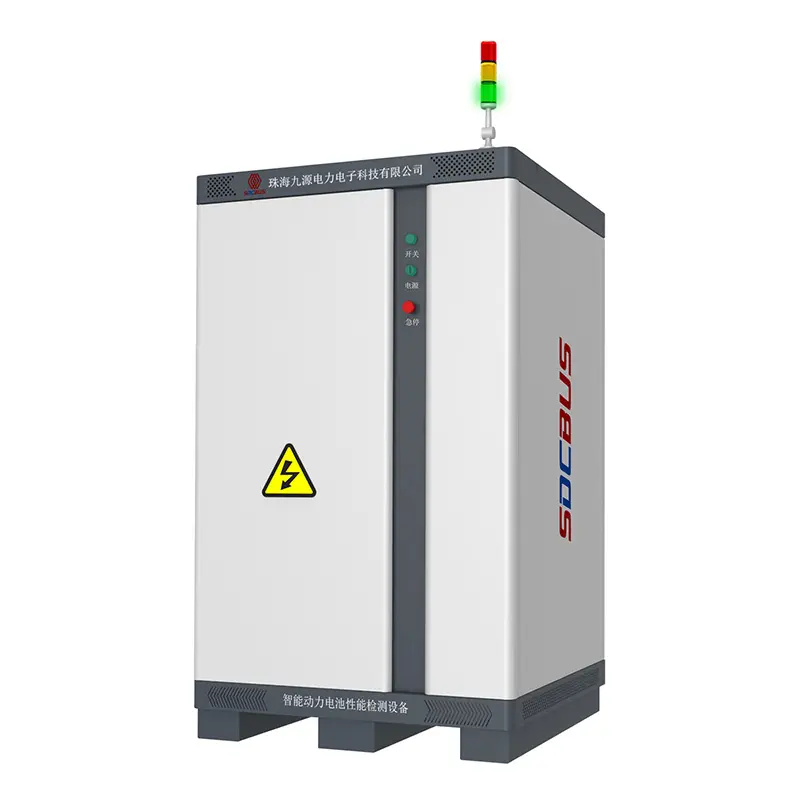
When selecting a lithium-ion battery capacity tester, certain features are non-negotiable to ensure accuracy, reliability, and compatibility. Precision is paramount: the tester must measure current, voltage, and time with high resolution to calculate capacity accurately. Our solutions achieve voltage and current accuracy of ±0.05% and frequency stability of ±0.001 Hz, ensuring even subtle capacity variations are reliably detected. Beyond capacity measurement, these testers also support environmental and load simulations to evaluate battery performance under realistic operating conditions.
Communication capabilities are another critical aspect, as seamless data transmission and remote control enhance testing efficiency. Unlike traditional USB-based communication, advanced testers adopt industrial-grade communication protocols that are tailored for rigorous testing scenarios. These protocols stand out with superior anti-interference performance, extended transmission distances, and robust support for multi-device networking—making them perfectly suited for large-scale testing environments such as battery production lines or energy storage labs. For example, using a serial networking topology allows multiple testers to be connected in a streamlined manner, simplifying wiring arrangements and enabling centralized control of the entire testing system. Meanwhile, these industrial-grade protocols facilitate smooth communication between testers and upper-level management software, empowering real-time data logging, automated report generation, and comprehensive historical data analysis to optimize testing workflows.
Energy efficiency is also a key consideration.Traditional resistive load testers waste significant energy as heat during discharge. Modern capacity testers, however, incorporate bidirectional power flow technology, which feeds the energy released during discharge back to the grid or a storage system. This can reduce energy consumption by 96–98.5%, depending on the power level, and also lowers operational costs—a feature highly valued by our clients in large-scale manufacturing and energy storage projects.
Practical Applications of Lithium-ion Battery Capacity Testing
Capacity testing is widely applicable across multiple industries, each with unique requirements. In the electric vehicle (EV) sector, accurate capacity testing ensures that battery packs meet range commitments. Automakers rely on rigorous capacity testing during R&D and production to validate battery performance under various driving conditions, from urban commuting to long-distance travel. Our testers have been used to test battery packs for electric passenger cars, trucks, and even eVTOLs (electric vertical takeoff and landing aircraft), helping manufacturers optimize battery design and improve overall vehicle performance.
In stationary energy storage systems (ESS)—including grid-scale, commercial, and residential storage—capacity testing is critical for ensuring reliable power supply. For example, a commercial storage project supporting a data center requires batteries to maintain stable capacity over thousands of charge-discharge cycles. Regular capacity testing allows operators to monitor battery degradation, plan maintenance, and avoid power disruptions. Our solutions are designed to handle high-capacity battery packs, supporting both single-cell and module-level testing to meet the diverse needs of ESS applications.
Consumer electronics, such as smartphones, laptops, and portable power banks, also benefit from capacity testing. Manufacturers use it to ensure their products meet advertised battery life, while third-party testing labs rely on it to verify product claims. Even specialized applications like aerospace drones and spacecraft power systems require precise capacity testing to ensure mission success, as battery failure in these scenarios can have severe consequences.
Best Practices for Effective Lithium-ion Battery Capacity Testing
To ensure reliable and consistent test results, following best practices in capacity testing—which serves as the foundation for comprehensive battery performance evaluation—is essential. First, calibrate the tester regularly. Over time, electronic components may drift, affecting measurement accuracy. Calibration against traceable standards—such as those certified by national metrology institutes—ensures the tester performs within specified tolerances. We recommend quarterly calibration for high-frequency use and annual calibration for occasional testing.
Second, control the testing environment. As mentioned earlier, temperature has a significant impact on battery performance. Conduct tests in a temperature-controlled chamber to maintain a stable environment (20-25°C is optimal). Avoid testing in extreme humidity or dusty conditions, as these can damage the tester or the battery.
Third, standardize the test procedure. Follow industry standards (e.g., IEC 61960 for secondary lithium-ion batteries) or manufacturer specifications for charging and discharging rates, cut-off voltages, and rest periods. Consistency in procedure ensures that test results are comparable across different batches of batteries or different testing sessions.
Fourth, analyze test data comprehensively. A single capacity reading may not provide a complete picture of battery health. Track capacity over multiple charge-discharge cycles to identify degradation trends. Our testers integrate data analysis software that generates detailed reports, including capacity retention rates, internal resistance changes, and cycle life predictions, helping users make informed decisions about battery usage and replacement.
Finally, handle batteries with care. Avoid overcharging or over-discharging during testing, as this can damage the battery and reduce its lifespan. Use appropriate safety equipment, such as insulated gloves and goggles, and follow proper battery handling procedures to prevent short circuits or thermal runaway.
Conclusion
Lithium-ion battery capacity testing is the core process that ensures battery runtime, health, and reliability across a wide range of applications—from electric vehicles and energy storage systems to consumer electronics and aerospace technology. While accurate capacity measurement is critical, it also serves as the foundation for broader battery performance evaluation, including charge/discharge efficiency, internal resistance, cycle life, thermal behavior, and response under simulated operational conditions.
A high-quality battery performance testing system—equipped with precision measurement, advanced communication interfaces, energy-efficient technology, user-friendly software, and environmental and load simulation capabilities—enables accurate, repeatable, and meaningful results. By following best practices such as regular calibration, controlled environments, standardized procedures, and operational simulations, users can fully understand battery behavior and optimize performance under real-world conditions.
At Zhuhai Jiuyuan, we are committed to providing high-precision, intelligent, and versatile battery testing solutions. Our systems meet the diverse needs of the new energy industry, supporting innovation and clean energy adoption. Whether you are a manufacturer, testing laboratory, or end-user, our solutions help unlock the full potential of lithium-ion batteries through accurate capacity testing and comprehensive performance evaluation.
Table of Contents
- Introduction: The Significance of Capacity Testing for Lithium-ion Batteries
- Key Principles of Lithium-ion Battery Capacity Testing
- Essential Features of a High-Quality Lithium-ion Battery Capacity Tester
- Practical Applications of Lithium-ion Battery Capacity Testing
- Best Practices for Effective Lithium-ion Battery Capacity Testing
- Conclusion