
 EN
EN
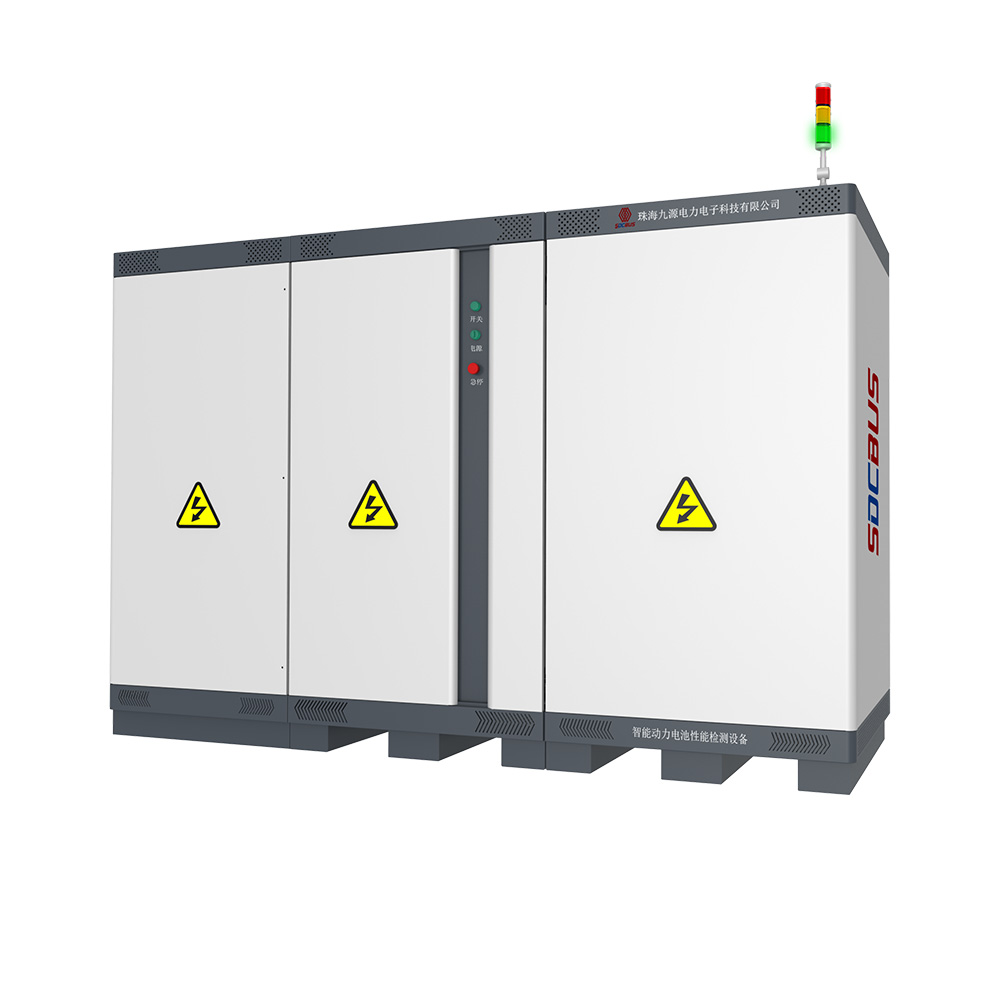
The global transition to a resilient electrical grid hinges on the continuous evolution of megawatt-class battery integration. At the core of this infrastructure sits the high-power energy storage converters PCS (Power Conversion System), which operates as the critical bidirectional electronic bridge between chemical battery storage units and the high-voltage utility grid. As a premier pioneer in power electronics, Zhuhai Jiuyuan Power Electronic Technology delivers a powerful dual-advantage to the global energy market: we are both an advanced developer and manufacturer of high-performance energy storage converters, and a specialized provider of comprehensive, high-precision PCS testing solutions and integrated systems.
The Strategic Engineering Role of High-Power Conversion Systems
Managing power on a utility scale requires equipment that can handle massive electrical loads while executing instantaneous commands. A professional high-power energy storage converters PCS typically operates in capacity ranges from hundreds of kilowatts to multiple megawatts. Its primary operational mandate is twofold: converting alternating current (AC) from the grid into stabilized direct current (DC) to charge battery PACKs during periods of low demand, and reversing that conversion (DC to AC) to pump clean power back into the grid during peak loads.
Because a high-power converter is subjected to constant operational stress, any unaddressed hardware anomalies or control logic bottlenecks can lead to severe consequences, including thermal runaways, widespread grid harmonics, or catastrophic facility downtime. Consequently, maximizing the conversion efficiency and validating the systemic protection functions of a PCS unit is an absolute technical necessity before deployment.
Maintaining Exceptional Control Precision and Measurement Accuracy
The validation data derived during the commissioning or development phase of a PCS determines its long-term return on investment (ROI). Capturing subtle thermal trends, harmonic deviations, or minute power quality discrepancies requires a control and monitoring system with elite resolution boundaries.
To eliminate measurement uncertainties, our advanced PCS hardware and integrated test platforms adhere to strict international metrology standards. By guaranteeing an active current and voltage output accuracy of ±0.05% (five-ten-thousandths), our systems allow engineering teams to precisely map transient behavior under full-load profiles. This rigorous precision ensures that every calculated parameter—from true round-trip efficiency to dynamic response times—is mathematically defensible and ready for stringent third-party certification audits.
Advanced Verification Methodology and Electro-Thermal Simulation
Evaluating how a high-power energy storage converters PCS interacts with both the battery array and the grid demands a robust, fully automated laboratory environment. Our integrated test platform successfully unifies programmable AC grid simulation sources, regenerative bidirectional DC power supplies, and high-speed multi-channel analyzers controlled via automated scripts.
Our standard verification methodology subjects the PCS unit to a comprehensive battery of tests, including automated insulation checks, dynamic efficiency mapping across multiple power points, transient grid fault responses, and localized protection logic validation. By simulating extreme grid-connected environments in the laboratory, we provide developers and field operators with detailed, transparent engineering reports—complete with raw data sets, pass/fail thresholds, and precise uncertainty budgets—allowing for rapid firmware optimization.
Field-Proven Validation: A Case Study in Megawatt-Scale Adaptability
Demonstrating the field compliance of a high-power converter requires testing under extreme physical and electrical stress. In a recent validation project, our technical team conducted full-scale performance testing for a 500kW grid-tied PCS integration module.
Utilizing our proprietary ±0.05% high-accuracy measurement system, we executed rigorous full-load efficiency profiling and verified the converter's Low Voltage Ride-Through (LVRT) and High Voltage Ride-Through (HVRT) capabilities. The converter's integrated protection circuits responded to simulated grid step faults well within industry-standard millisecond limits, generating flawless independent data metrics that verified product compliance prior to commercial field installation.
Industrial Fieldbus Protocols for Seamless Telemetry Synchronization
Operating heavy industrial equipment requires heavy-duty communication networks that can cut through massive electromagnetic interference (EMI). Relying on fragile consumer-grade data conduits like USB is strictly avoided in our technical designs, as high-frequency switching noise from megawatt-level transformers can easily corrupt or drop data packets during critical testing cycles.
To ensure absolute telemetry synchronization, our systems leverage field-proven industrial communication networks. Linking multiple hardware units via a highly secure CAN (Controller Area Network) bus or a high-speed Daisy Chain configuration allows for synchronized multi-channel command execution. Complemented by RS485, RS232, and Modbus (RTU/TCP) protocols, these industrial networks facilitate direct, lag-free data linkage with the customer's central Energy Management System (EMS) and Battery Management System (BMS) architectures.
Strategic Market Positioning and Specialization Boundaries
To ensure the highest level of reliability and safety, our core engineering focus is intentionally directed toward system-level, large-scale utility power applications.
Our hardware and software ecosystems are specifically optimized for full-scale battery PACK-level validation, megawatt-class high-power energy storage converters PCS characterization, microgrid performance mapping, and utility-grade grid adaptability simulation. By maintaining this clear focus on high-power energy infrastructure, we deliberately separate our development and testing matrix from individual battery cell testing (cell testing), consumer-grade UPS installations, low-voltage frequency converters, or the general calibration of precision automated factory assembly tools. This precise specialization boundaries prevent transient line noises from entering your datasets, ensuring that your core energy storage asset performs flawlessly under extreme real-world stress.
Conclusion: Driving Global Energy Storage Competitiveness
The deployment of high-power energy storage converters represents a multi-million dollar capital investment that requires guaranteed operational safety and strict adherence to global grid codes. Partnering with a comprehensive technology leader like Zhuhai Jiuyuan—who possesses deep technical expertise in both advanced hardware manufacturing and rigorous performance validation—ensures that your energy storage asset is fully optimized for peak performance, maximum safety, and rapid global market entry.
Table of Contents
- The Strategic Engineering Role of High-Power Conversion Systems
- Maintaining Exceptional Control Precision and Measurement Accuracy
- Advanced Verification Methodology and Electro-Thermal Simulation
- Field-Proven Validation: A Case Study in Megawatt-Scale Adaptability
- Industrial Fieldbus Protocols for Seamless Telemetry Synchronization
- Strategic Market Positioning and Specialization Boundaries
- Conclusion: Driving Global Energy Storage Competitiveness