
 EN
EN
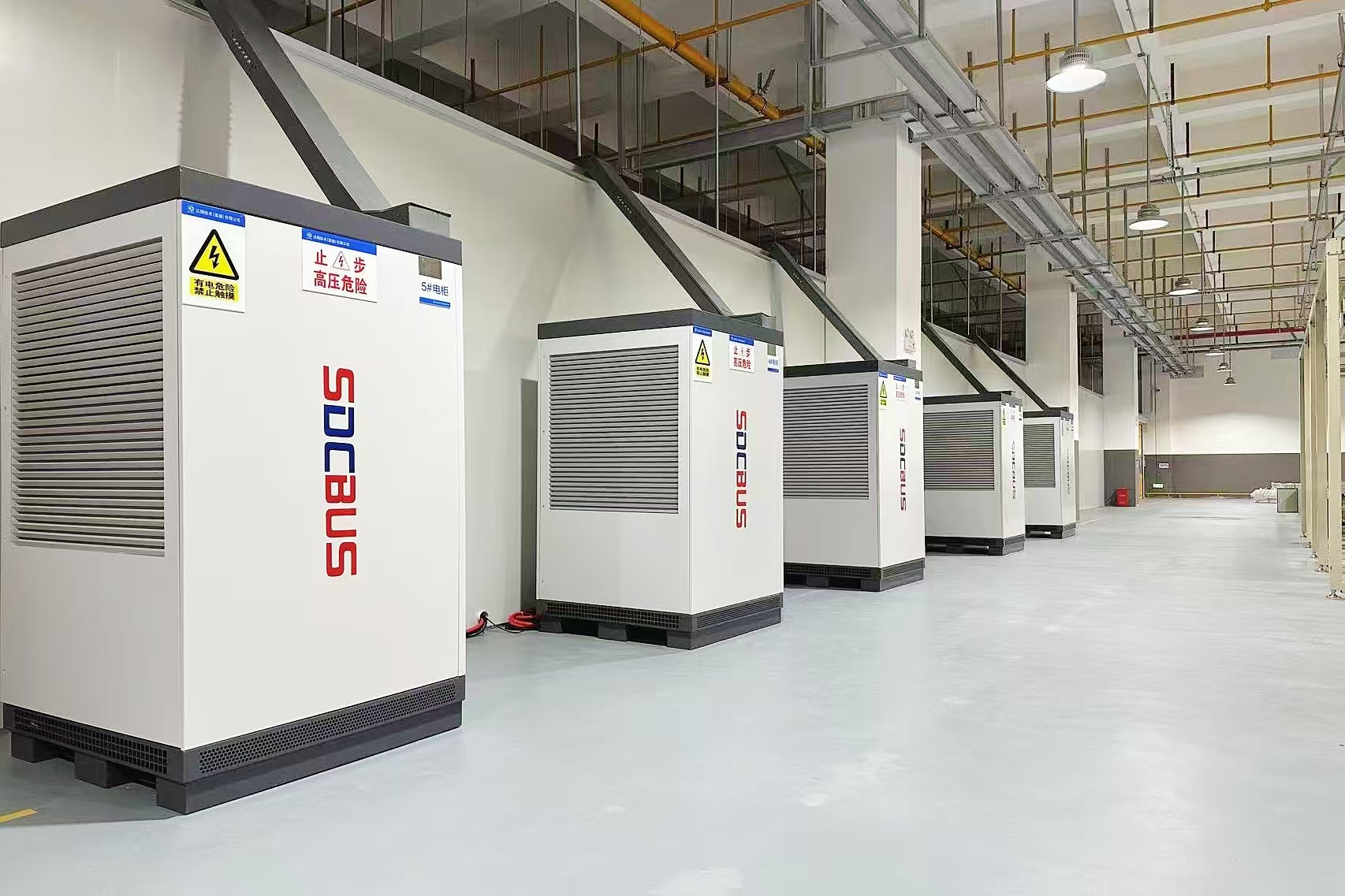
Executive Summary and Selection Context
Modern industrial performance testing facilities, energy storage research centers, and power grid simulation labs face constant challenges caused by noisy, unstable utility power grids. Harmonic distortion, voltage sags, and high-frequency electrical noise can undermine test precision, distort measurement data, and even compromise safety during high-power battery pack and Power Conversion System (PCS) performance testing. Choosing the right grid purification power supplies supplier is therefore a strategic technical decision that impacts testing accuracy, system longevity, and overall operational reliability.
Selecting an equipment partner involves evaluating criteria far beyond basic spec-sheet comparisons. An ideal technical partner must demonstrate proven manufacturing quality, verified measurement accuracy, high-efficiency power architectures, versatile software integration, and responsive lifecycle support. In this evaluation guide, we outline the critical metrics lab directors and procurement managers should examine to ensure a dependable equipment investment.
Measurement Accuracy and Voltage Regulation Capabilities
The primary function of a grid purification system in a performance testing environment is to supply clean, ultra-stable AC power despite utility grid fluctuations. When evaluating potential vendors, testing engineers must prioritize output voltage and current regulation capabilities. Substandard power purification units can introduce subtle phase noise or voltage drift, directly corrupting high-precision battery module and pack performance evaluation.
A top-tier grid purification power supplies supplier should offer equipment featuring output voltage accuracy and output current accuracy of ±0.05% F.S. (Full Scale). This level of precision ensures that test waveforms remain pristine even during rapid transient load changes or severe grid fault simulations. Furthermore, verify the unit's Total Harmonic Distortion (THD) performance under full-load conditions. Suppliers that utilize advanced silicon carbide (SiC) switching technology and active power filtering can consistently achieve THD levels below 1%, providing an unpolluted electrical baseline for critical performance validation.
Power Architecture Efficiency and Energy Recovery Integration
In high-power testing applications, operational energy consumption represents a major ongoing cost. Conventional linear or non-regenerative power conditioning equipment converts excess energy into heat, requiring extensive HVAC cooling infrastructure and driving up utility expenses. Consequently, assessing a vendor's power conversion topology and regenerative efficiency is essential.
When evaluating a grid purification power supplies supplier, look for advanced bidirectional, energy-regenerative architectures. Equipment built with shared DC bus topology allows energy dissipated during battery pack or PCS discharge testing to be recycled locally or fed back into the facility’s internal AC grid with high efficiency. This not only reduces total facility energy consumption by up to 80–90% during cycling tests but also minimizes heat dissipation requirements, lowering both operational expenditure (OPEX) and carbon footprint.
Industrial Communication Protocol Compatibility and Software Integration
Seamless control integration into existing laboratory automation networks is a core requirement for modern test facilities. Industrial test environments demand communication interfaces that resist high-frequency electromagnetic interference (EMI).
A reliable grid purification power supplies supplier should offer broad compatibility with standard industrial protocols, including Modbus TCP/RTU, CAN bus, RS485, RS232, and multi-unit Daisy-Chain configurations. When reviewing vendor specs, ensure they offer open driver support and Software Development Kits (SDKs) compatible with major lab control environments like LabVIEW, MATLAB, or custom SCADA architectures. This simplifies software setup and enables automated test execution across complex laboratory equipment.
Safety Interlocks, Protective Features, and International Compliance
Operating heavy-duty power electronics in performance test labs involves inherent electrical and thermal risks. Ensuring equipment and operator safety requires rigorous multi-layer protective mechanisms built directly into the hardware and firmware.
When auditing a grid purification power supplies supplier, verify that their equipment incorporates hardware-level safety features, including over-voltage, over-current, over-temperature, and short-circuit protection. The system must feature integrated Emergency Stop (E-Stop) safety loops that interface directly with main laboratory safety systems to instantly isolate high-voltage contactors during a fault. Additionally, confirm that the supplier's products comply with key international standards, such as IEC 61010-1 for safety, EN 61000-6-2/4 for electromagnetic compatibility (EMC), and IEEE 1547 / UL 1741 for grid interconnection testing. Traceable calibration procedures accredited under ISO/IEC 17025 further demonstrate a supplier's commitment to quality and trustworthiness.
Customization Capabilities, Warranty, and Technical Support
High-power testing requirements vary significantly depending on application scope, voltage levels, and laboratory infrastructure. A vendor offering rigid, off-the-shelf equipment may fail to meet specialized testing scenarios.
A reliable grid purification power supplies supplier should offer customizable system configurations, scalable power modules, and tailored cabinet integration. Beyond hardware capabilities, evaluate the vendor's technical support infrastructure, warranty terms, and field engineering service availability. Leading suppliers provide dedicated application engineering assistance, on-site commissioning support, rapid spare parts availability, and annual calibration services. Partnering with a vendor that offers long-term lifecycle support ensures high equipment availability, minimizes costly lab downtime, and future-proofs your testing facility as energy storage technologies evolve.
Conclusion and Final Recommendations
Selecting a grid purification power supplies supplier is a crucial decision that directly influences the precision, safety, and operational efficiency of your battery and energy storage testing lab. By systematically evaluating suppliers based on measurement accuracy, regenerative power efficiency, industrial communication flexibility (CAN, Modbus, daisy-chain), and comprehensive safety compliance, you can establish a reliable testing infrastructure. A strong partnership with a capable power electronics supplier ensures your test facility consistently delivers valid, publication-grade results while maintaining long-term operational excellence.
Table of Contents
- Executive Summary and Selection Context
- Measurement Accuracy and Voltage Regulation Capabilities
- Power Architecture Efficiency and Energy Recovery Integration
- Industrial Communication Protocol Compatibility and Software Integration
- Safety Interlocks, Protective Features, and International Compliance
- Customization Capabilities, Warranty, and Technical Support
- Conclusion and Final Recommendations