
 EN
EN
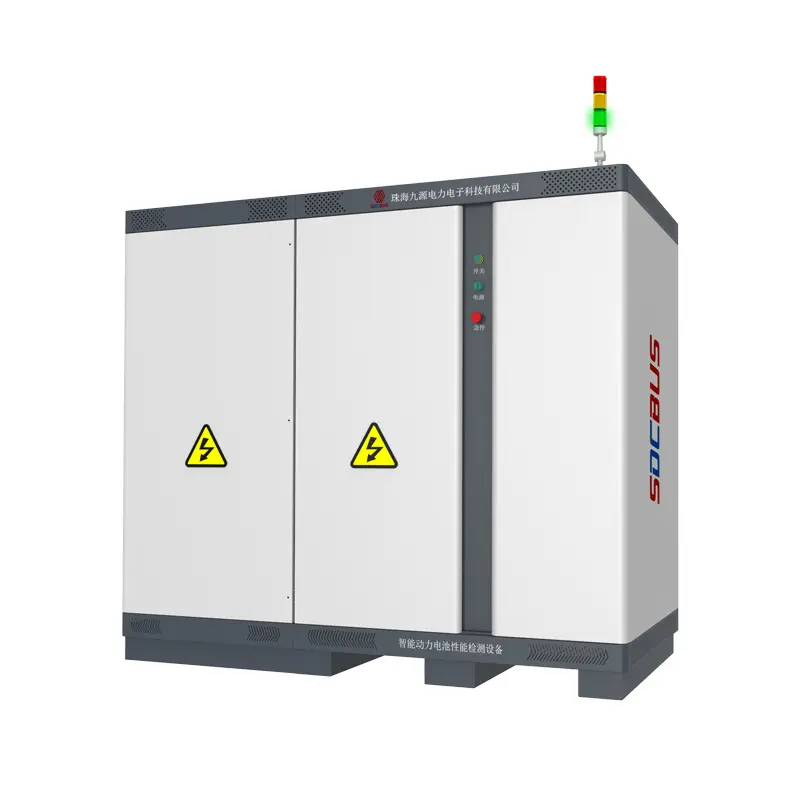
The rapid global transition toward high-capacity renewable energy grids has fundamentally shifted the validation requirements for large-scale power infrastructure. Modern Energy Storage Systems (ESS) are no longer simple static hardware configurations; they are complex networks combining electrochemistry, high-power electronics, and dynamic management software. Before any commercial utility asset can be integrated into a live regional grid, it must undergo a series of rigorous evaluations. This is where a highly specialized ess testing power supply for performance test infrastructure becomes essential. To maintain strict technical accuracy, these configurations are not standalone power supplies sold as finished physical products. Instead, they are comprehensive, integrated performance validation platforms. These multi-tier testing architectures combine bidirectional power modules, advanced software scripts, and telemetry interfaces to safely evaluate how complex battery packs behave under simulated real-world conditions. Companies like Zhuhai Jiuyuan Power Electronics focus exclusively on engineering these specialized validation systems, helping manufacturers secure global grid compliance through precise empirical proof.
Core Measurement Capabilities and Five-Ten-Thousandths Tracking Precision
When evaluating an ess testing power supply for performance test application, absolute measurement precision under continuous heavy load serves as the definitive baseline. During extended multi-channel cycling, even minor measurement drift can accumulate into significant mathematical errors, completely invalidating critical capacity fade projections and state-of-charge tracking. To prevent these costly engineering errors, our advanced validation systems maintain an elite voltage and current measurement accuracy of ±0.05% (five-ten-thousandths) across all operational channels. This exceptional stability allows engineering teams to accurately measure subtle performance shifts, such as round-trip efficiency degradation and long-term DC internal resistance drift.
Furthermore, combining multiple high-power channels requires zero-latency synchronization across the entire laboratory array. To maintain absolute data integrity in high-voltage test cells, our systems completely avoid consumer-grade interfaces like USB, which are highly vulnerable to data packet drops caused by electromagnetic noise. Instead, our architectures utilize robust, noise-immune industrial fieldbuses, establishing a secure telemetry network via native CAN and rapid Daisy Chain topologies. Supported by industrial RS485, RS232, and Modbus (RTU/TCP) protocols, this multi-layered framework ensures seamless, interference-free data communication directly between the hardware execution layers and the control software.
Bidirectional Module Architectures and Regenerative Power Processing Efficiency
Modern multi-channel performance validation systems rely heavily on advanced bidirectional hardware topologies. This integrated design allows a single operational module to seamlessly shift between sourcing electrical energy to charge an asset and absorbing massive power loads during deep discharge phases. Rather than dissipating thousands of kilowatts of discharged energy as ambient waste heat, our regenerative power processing architecture captures the outgoing DC energy and channels it back into the facility’s AC utility grid. This sustainable energy recovery method achieves industry-leading efficiency, dramatically lowering the overall electricity consumption and thermal management costs of long-duration validation testing.
These bidirectional power networks support true four-quadrant operation, giving laboratory operators the ability to control voltage and current polarity in any combination. This precise control is critical for replicating real-world operational scenarios, such as when an enclosure manages erratic renewable generation inputs while responding to sudden grid frequency events. The seamless transition between sourcing and absorbing energy occurs within milliseconds, allowing developers to capture high-fidelity data on transient response times, dynamic control loop speeds, and rapid power-factor adjustments.
Advanced Grid Condition Simulation and Regulatory Compliance Verification
A vital role of a system-level performance validation platform is testing how a commercial storage asset responds to severe grid volatility. In actual operation, utility assets are constantly exposed to unpredictable disturbances, including severe voltage sags, rapid frequency excursions, high-order harmonic distortion, and sudden massive load adjustments. Replicating these harsh conditions within a controlled environment is essential for validating the safety algorithms and phase-locked loop synchronization built into modern power conversion systems.
Using our programmable software interface, engineering teams can execute automated testing scripts to simulate precise grid disturbance profiles. For instance, developers can program a sudden voltage drop down to 70% of nominal value for a duration of 500 milliseconds to observe if the device successfully rides through the event. Our automated validation software supports frequency sweep profiling from 45 Hz to 65 Hz alongside precise harmonic injection routines to evaluate control loop stability under distorted wave conditions. These extensive simulation capabilities are necessary for verifying compliance with international grid-interconnection standards such as IEEE 1547. The empirical data generated forms the definitive foundation for securing regulatory approvals in competitive global energy markets across North America, Europe, and Asia, all while keeping testing personnel safe within a secure laboratory envelope.
Defining Strict Application Boundaries and Specialized Validation Scopes
To maintain the highest standards of hardware safety and data reliability, a professional performance testing system must operate within clearly defined functional boundaries. Our industrial technology ecosystem is specifically engineered for high-voltage battery PACK-level performance verification, utility-scale power conversion system (PCS) adaptability testing, microgrid simulation, and comprehensive capacity characterization.
By keeping our engineering focus purely on system-level validation, we purposefully exclude individual battery cell testing (cell testing) from our operational scope. Furthermore, our performance platforms are not designed for, and cannot be integrated into, general factory industrial automation assembly lines, consumer-grade UPS networks, or low-voltage industrial variable frequency drives (VFDs). Our equipment cannot be applied to the calibration of generic automated factory tools or general industrial electronics. This dedicated specialization isolates our matrix testing environments from unrelated electrical transients, ensuring all captured data metrics represent true, uncorrupted system-level battery performance.
Practical Engineering Triumphs in High-Voltage PCS Pre-Compliance Testing
Proving real-world compliance with rigid international grid codes requires empirical, laboratory-controlled evidence under extreme physical stress. Recently, our technical field engineers deployed our specialized multi-channel performance testing platform to assist a prominent renewable energy equipment manufacturer in validating a 500kW grid-tied commercial conversion module destined for an overseas distributed infrastructure project.
The testing sequence required executing continuous Low Voltage Ride-Through (LVRT) and High Voltage Ride-Through (HVRT) sequence scripts while managing rapid, massive load adjustments from the hardware under test. Utilizing our ±0.05% high-accuracy tracking system, the platform stabilized the testing environment and captured flawless, independent data metrics as the converter's integrated protection circuits responded to simulated grid step faults well within industry-standard millisecond limits. This comprehensive laboratory-controlled validation allowed the client to optimize their control firmware ahead of official audits, successfully avoiding expensive field certification delays and safeguarding their capital investment.
Selecting Scalable Validation Platforms for Long-Term B2B Laboratory Operations
For global engineering teams tasked with building or upgrading an advanced energy storage validation facility, selecting the right long-term infrastructure requires looking beyond basic power ratings. Procurement managers must prioritize systems that feature true four-quadrant bidirectional power recovery, stable ±0.05% tracking precision across dynamic channel arrays, millisecond-level transient response execution, and native support for heavily shielded industrial communication protocols. Partnering with a dedicated specialist focused entirely on advanced performance testing systems ensures your energy storage assets remain perfectly optimized, fully compliant, and ready for rapid global market deployment.
Conclusion
Advanced programmable testing architectures represent the definitive foundation of credible, globally accepted energy storage characterization. By replacing unpredictable field uncertainties with laboratory-controlled, high-fidelity simulation, these systems provide forward-thinking manufacturers with the documented evidence of performance and safety that global regulators and utility developers increasingly demand.
Table of Contents
- Core Measurement Capabilities and Five-Ten-Thousandths Tracking Precision
- Bidirectional Module Architectures and Regenerative Power Processing Efficiency
- Advanced Grid Condition Simulation and Regulatory Compliance Verification
- Defining Strict Application Boundaries and Specialized Validation Scopes
- Practical Engineering Triumphs in High-Voltage PCS Pre-Compliance Testing
- Selecting Scalable Validation Platforms for Long-Term B2B Laboratory Operations
- Conclusion